CBD Balm UK
A CBD balm is a wax and oil base with cannabinoids in it, rubbed into the skin rather than swallowed, and it is the one format on this site that never meaningfully reaches the bloodstream. That single fact separates this aisle from every other one: different rules apply, the Food Standards Agency daily figure does not, and the milligrams on the pot mean something different from the milligrams on a bottle of oil. We stock four lines here, which is a small aisle and we will say so, but the four cover warming, cooling, neutral and a cream.
CBD Topicals by brand
Also worth a look
A CBD balm is a wax and oil base with cannabinoids in it, rubbed into the skin rather than swallowed, and it is the one format on this site that never meaningfully reaches the bloodstream. That single fact separates this aisle from every other one: different rules apply, the Food Standards Agency daily figure does not, and the milligrams on the pot mean something different from the milligrams on a bottle of oil. We stock four lines here, which is a small aisle and we will say so, but the four cover warming, cooling, neutral and a cream.
Topicals stay where you put them
Everything else we sell goes into you. This does not.
A balm or cream is worked into the skin, where the cannabinoids interact locally with receptors in the skin and the tissue beneath it. The amount that finds its way into general circulation is negligible, which is the settled position across this category and one that the better competitor pages state clearly.
Three consequences follow, and they are the reason this page exists.
First, there is no systemic effect to plan around. A balm will not make you drowsy, will not interact with anything the way an oil might, and cannot be intoxicating even in principle. Second, it does not count towards the Food Standards Agency guidance of about 10mg a day, because that guidance is about what you swallow. Third, and most usefully, there is no reason to be sparing. This is the one CBD product where using more of it is a question of how much you want to rub in, not how much you want to take.
It also means the milligram figure on a pot is telling you about concentration in a tub rather than a dose. Which brings us to the arithmetic.
The bigger pot is not the stronger product
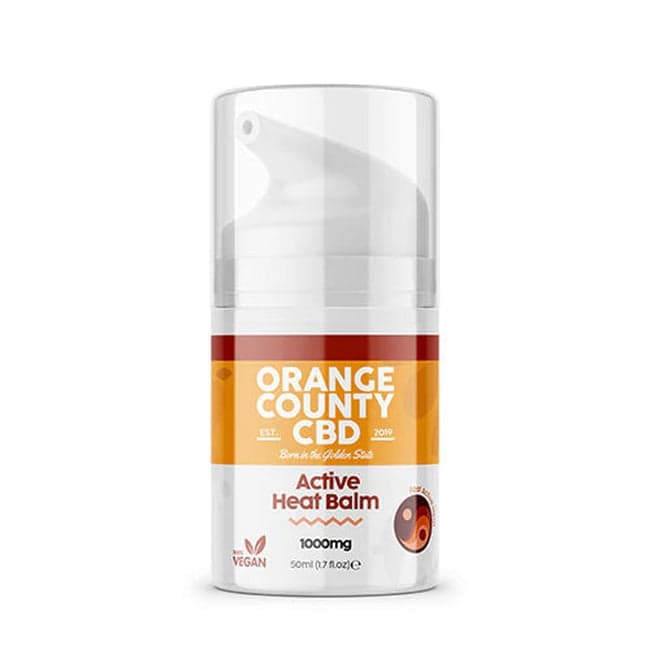
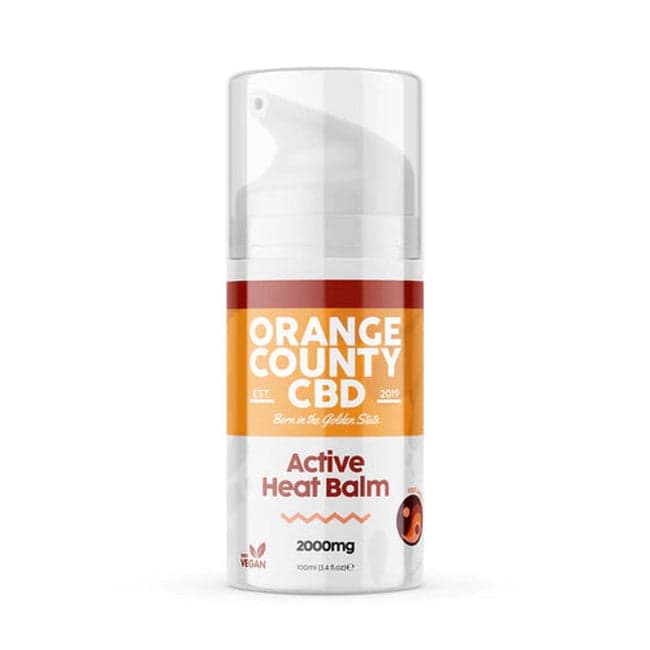
Orange County sells its balm as 1000mg in 50ml and as 2000mg in 100ml. The second has twice the number on the front. It is not twice as strong.
Divide each by its own volume and both come out at about 20mg in every millilitre. They are the same balm at the same concentration, and the only difference is that one pot holds twice as much of it. If you get through balm quickly the larger pot is a supply decision; if you do not, the smaller one is the same product in a size you will finish.
This is the same trap as on our CBD oil shelf, running in the opposite direction. There, a bigger bottle at the same total is weaker in a drop. Here, a bigger pot at double the total is identical in the hand. In both cases the front-of-pack figure is the wrong number to compare on, and in both cases the fix is one division.
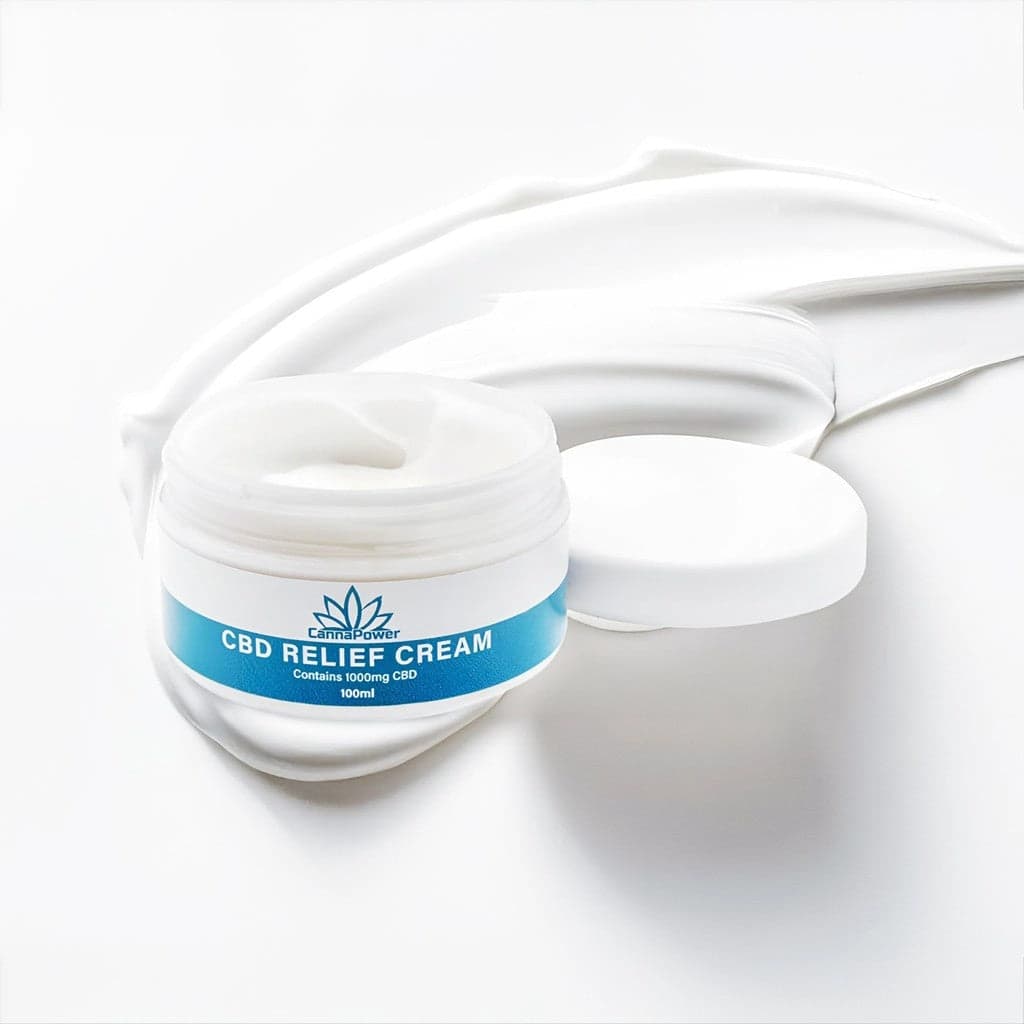
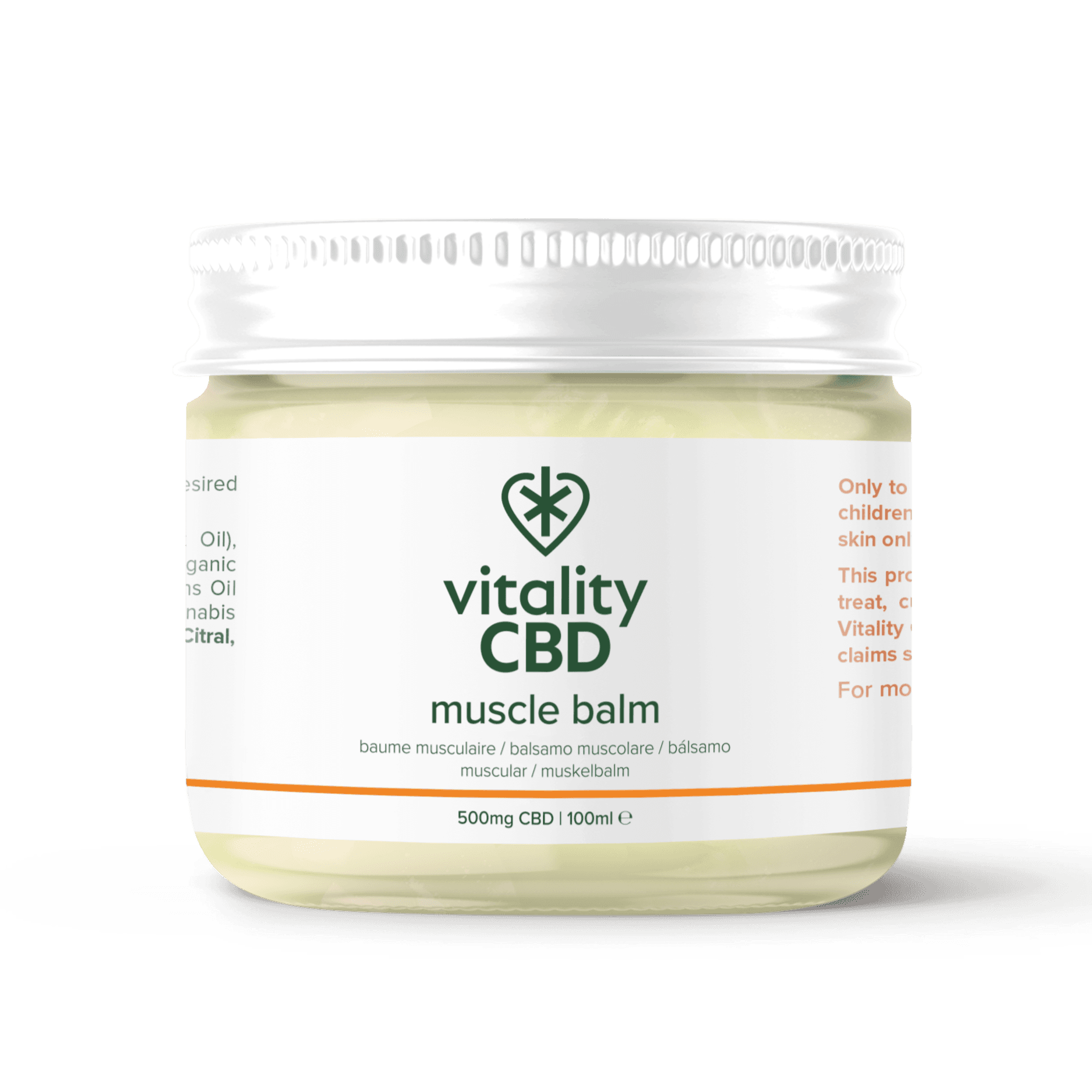
Not everything here states a volume. The Cannapower CBD Relief Cream prints 1000mg without a millilitre figure in the product name, and the Vitality Muscle Balm prints a 50ml volume without a milligram figure. In both cases the missing half is on the product page, and until you have both numbers you cannot compare either against the Orange County pots.
| Line | Printed | Roughly per millilitre | Format |
|---|---|---|---|
| Orange County CBD Balm 1000mg 50ml | 1,000mg in 50ml | About 20mg | Balm, in Active Heat, Deep Freeze or Muscle and Joint |
| Orange County CBD Balm 2000mg 100ml | 2,000mg in 100ml | About 20mg, the same as the smaller pot | Balm, same three variants |
| Cannapower CBD Relief Cream 1000mg | 1,000mg, volume on the product page | Check the listing for the volume | Cream, the only one in the aisle |
| Vitality CBD Muscle Balm 50ml | 50ml, strength on the product page | Check the listing for the strength | Balm |
Balm or cream, and why the base matters
The two words get used interchangeably across UK CBD retail, including by the page currently ranking first for this search, and they describe genuinely different things.
A balm is oil and wax. It has no water in it, which makes it thick, slow to sink in and inclined to sit on the surface for a while. That is a feature rather than a fault: it stays where you put it, it does not evaporate, and it keeps working on one spot rather than spreading. It also leaves a residue, which is why balms suit an evening rather than a shirt sleeve.
A cream is an emulsion of oil and water. It absorbs faster, feels lighter, spreads further and disappears sooner. Better for larger areas, better under clothes, and shorter lived on any one spot. Our single cream is the Cannapower.
Neither is stronger by nature. The base changes how long the product stays put and how it feels, and the concentration figure is a separate question entirely.
One further distinction worth knowing, because the terms are cheerfully mixed: a salve is a balm, a muscle rub is usually a balm with warming or cooling actives in it, and a gel is a cream that has been thickened. Anyone telling you a rub is a different category from a balm is describing marketing rather than chemistry.
| Balm | Cream | |
|---|---|---|
| Base | Oil and wax, no water | An emulsion of oil and water |
| Feel | Thick, sits on the skin, leaves a residue | Lighter, absorbs quickly, little residue |
| Staying power | Long on one spot | Shorter, but spreads further |
| Suits | A targeted area, in the evening | Larger areas, under clothes, during the day |
| Stocked here | Orange County 1000mg and 2000mg, Vitality Muscle Balm | Cannapower CBD Relief Cream |
Warming, cooling or neither
Orange County runs all three of its balm variants at both sizes, and the difference between them is not the CBD. It is what else has been put in.
Deep Freeze is the cooling one. Cooling in a topical almost always comes from menthol, which triggers the same cold receptors in the skin that actual cold does, producing a sensation of coolness without changing the temperature of anything. It is immediate and it fades over a few minutes.
Active Heat is the warming one, and warmth in a balm typically comes from ingredients such as camphor or capsicum extract, working the other way on the same principle. It builds more slowly than menthol cools and lasts longer.
Muscle and Joint is the neutral option: the balm without a strong thermal active, for people who want the base and the cannabinoid without the sensation. If you have sensitive skin or dislike the tingle, this is the one to start with.
None of this is a claim about what any of them does. It is a description of what you will feel when you rub it in, which is a genuine difference between three products that otherwise share a name, a strength and a pot.
Vitality's Muscle Balm and the Cannapower cream each have their own ingredient list, and since actives vary from brand to brand it is worth reading the panel if a particular ingredient does not agree with you.
Cosmetics, not food: what that actually means
This is the part every page in this category either skips or names without explaining, and it is the defining fact about the aisle.
Anything you swallow sits inside the Food Standards Agency Novel Foods regime. Our gummies, oils, drinks and edibles all do. A balm is not eaten, so it does not, and one competitor deserves credit for saying so plainly while the rest say nothing at all.
What applies instead is UK cosmetic products regulation, and it is not a lighter regime, it is a different one. In practice a cosmetic sold in the UK needs a documented safety assessment by a qualified assessor, a named responsible person accountable for it, a product information file, notification to the UK cosmetic products database, and a full ingredient list in the standardised INCI naming that appears in small type on the back of every cream you own. Those requirements are why a balm can be sold without the authorisation dossier an ingestible needs, and they are a substantive set of obligations rather than an absence of them.
The cannabinoid limit still applies, and it is the same one that governs everything else on this site: no more than 1mg of controlled cannabinoids in the whole container. Per container, not per application, and not a percentage.
That last point is worth pressing, because even the best-built page in this category still states the percentage figure alongside the correct test as though a product had to satisfy both. It does not. The percentage number is a hemp cultivation rule describing what a licensed farmer may grow, and it has never governed what a shop may sell you. Two other pages in this search result set state it as the UK limit with nothing else attached.
Everything in this aisle is isolate, so the question is largely academic here, but the principle is not.
Using it, and where not to
Clean, dry skin, a small amount to start, worked in until it stops sitting on the surface. Wash your hands afterwards, particularly with the warming variant, because menthol and camphor in the eyes are a genuinely unpleasant way to learn that lesson.
Patch test first if your skin reacts to things. A small amount on the inside of a forearm, left for a day, tells you what you need to know before you have covered a shoulder in something you dislike.
Do not apply a balm to broken skin, open wounds, or anywhere raw. Topicals are formulated for intact skin and the actives that make a warming balm warm are exactly the ingredients you do not want on a graze.
Avoid the face unless the product says it is for the face. Muscle balms are not facial skincare, and we do not currently stock a CBD facial product at all.
On storage: balms are wax and they melt. A pot left on a sunny windowsill will separate and reset with a different texture, and while it is not spoiled it will never feel right again. Keep them somewhere cool, close the lid, and note that a wax base outlasts a water-based cream comfortably once opened. The cream, like any emulsion, has a shorter open life and a period-after-opening symbol on the pot telling you what it is.
Three brands, four lines, and what is missing
This is the smallest aisle on the site and it would be dishonest to present it as a range. Four products, three brands, one of them contributing two pot sizes of the same balm.
What that does cover is the three sensations and both bases, which is most of the decision. What it does not cover is facial skincare, gels, patches, roll-ons, bath products or anything sold specifically for hands or feet, all of which exist in the wider UK market and none of which either of our two distributors carries in a form we would list.
The page ranking best for this search compares four balms, three of which come from brands we cannot buy. We are not going to pretend our four are a survey of the market. They are what is available to us, compared honestly against each other.
| Brand | What is here | Base | Worth knowing |
|---|---|---|---|
| Orange County CBD | Balm at 1000mg in 50ml and 2000mg in 100ml, each in Active Heat, Deep Freeze and Muscle and Joint | Balm | The only range covering warming, cooling and neutral, and the only one where both numbers are printed so you can work out the concentration. Both pots are about 20mg in a millilitre. |
| Vitality CBD | Muscle Balm, 50ml | Balm | Strength is on the product page rather than in the name. Vitality is the brand behind most of our oral sprays, so the formulation pedigree is on the oil shelf. |
| Cannapower | CBD Relief Cream, 1000mg | Cream | The only cream in the aisle, so the only option if you want something that absorbs quickly and vanishes. Volume is on the product page. |
When a topical is the wrong choice
Balms are the most forgiving CBD format and the narrowest in what they do.
If you want a general effect rather than a local one, this aisle cannot give you it, and no strength of balm changes that. Our CBD oil aisle is where a systemic format lives, and our CBD gummies aisle if you would rather not measure anything.
If you are trying to reach a daily amount of CBD, what you rub in does not count towards it. That is the flip side of the good news at the top of this page.
If you want facial skincare, we do not stock any, and a muscle balm is not a substitute for one.
If you have sensitive skin, start with the neutral Muscle and Joint variant rather than the warming or cooling ones, and patch test.
And if you are choosing between the two Orange County pots on the assumption that 2000mg is a stronger product than 1000mg, read the second section again. It is the same balm.
Over-18s only. Not for use on broken skin. If you are pregnant or breastfeeding, or under treatment from a doctor for anything affecting your skin, ask a pharmacist before starting.
Frequently asked questions
- Does a CBD balm reach the bloodstream?
- Not in any meaningful quantity. Topicals work locally, in the skin and the tissue immediately beneath it, and the amount that reaches general circulation is negligible. That is why a balm cannot make you drowsy, cannot be intoxicating even in principle, and is the one CBD format where using more of it is not a dosing question.
- Does a balm count towards a daily CBD total?
- No. The Food Standards Agency guidance of around 10mg a day for healthy adults concerns CBD from food supplements, which means things you swallow. A balm is not swallowed and does not enter that calculation. If you take an oil or gummies as well, only those count towards it.
- Balm or cream, which base should I choose?
- Balm if you want it to stay on one spot for a long time and you do not mind a residue, since a balm is oil and wax with no water in it. Cream if you want something lighter that absorbs quickly and spreads further, since a cream is an oil and water emulsion. Neither is stronger by nature; the base changes feel and staying power, not concentration.
- Is a 2000mg pot twice as strong as a 1000mg one?
- Not in Orange County's case, no. Its 1000mg comes in 50ml and its 2000mg in 100ml, so both work out at about 20mg in every millilitre. They are the same balm at the same concentration and the larger pot simply holds twice as much. Divide the milligrams by the millilitres before comparing any two topicals.
- Are CBD topicals covered by Novel Foods?
- No. Novel Foods governs things that are eaten or drunk, so it covers our gummies, oils, drinks and edibles and does not reach a balm. What applies instead is UK cosmetic products regulation, which requires a documented safety assessment, a named responsible person, a product information file and full INCI ingredient labelling.
- What is the difference between Active Heat, Deep Freeze and Muscle and Joint?
- What you feel, rather than the CBD. Deep Freeze uses a cooling active, typically menthol, which triggers cold receptors in the skin without anything actually being cold. Active Heat works the opposite way with warming ingredients. Muscle and Joint is the neutral version without a strong thermal active, and it is the one to choose if you have sensitive skin.
- Where should a balm not be used?
- Broken skin, open wounds, grazes or anywhere raw, and the face unless the product says it is for facial use. Warming and cooling actives are the ingredients you least want on damaged skin. Wash your hands after applying, since menthol and camphor near the eyes are memorably unpleasant.
- Can a topical show up on a workplace test?
- It is the lowest-risk CBD format there is, because so little reaches the bloodstream and because every line in this aisle is isolate rather than full spectrum. No retailer can promise you a test result on any product. If your job depends on it, an isolate topical is about the most conservative choice available anywhere in CBD.
- How should a balm be stored, and how long does it keep?
- Cool, dark and with the lid on. Wax melts, so a pot left in sunlight will separate and reset with a different texture, which is unpleasant rather than unsafe. A wax base keeps considerably longer once opened than a water-based cream does. The period-after-opening symbol on the pot is the number to go by.
Updated July 2026