ROOR
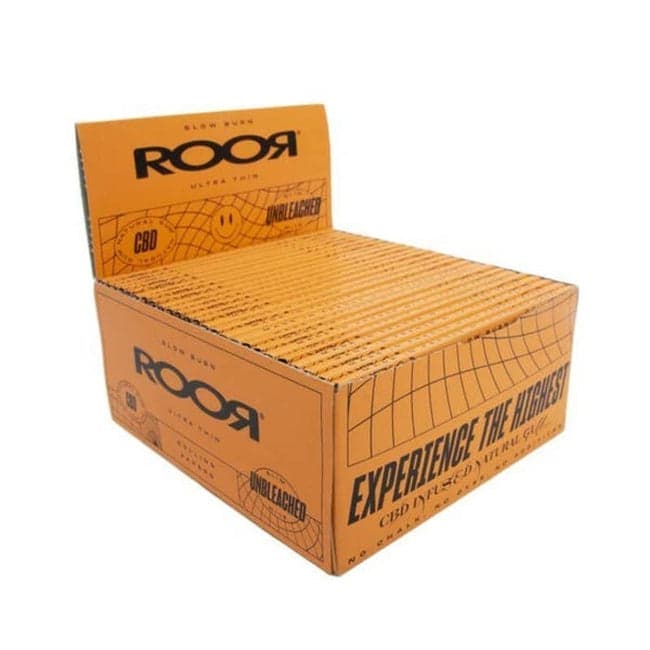
ROOR CBD Gum Ultra Thin King Size Papers, box of 50
£36.99
£0.74 each
In stock — dispatched today if ordered by 3pm
King size slim papers made in France with ROOR's patented CBD-infused acacia gum. The CBD is in the glue strip, not the leaf, and no quantity is published. 18+ only.
- Free UK delivery on orders over £30
- Third-party lab-tested — COA on every batch
- Discreet plain packaging, no branding outside
- Sold to over-18s only, age-checked at checkout
ROOR CBD Infused Ultra Thin King Size Rolling Papers are French-made king size slim leaves sold in three materials, and the CBD in the name is not in the paper. It is in the gum, the thin adhesive strip along one edge, which ROOR infuses using a process it holds a patent for. Every listing we found is titled as though the leaf itself is infused. None of them leads with the correction, and none of them tells you how much CBD is in there, because nobody publishes a figure.
The CBD is in the glue, not the paper
This is the single most important thing about the product and it is buried in every listing selling it.
A rolling paper has two parts: the leaf and the gum strip that seals it. ROOR's innovation, and the thing it holds an exclusive patent on, is putting CBD into the gum. The gum is a vegan acacia gum, which is the same natural adhesive used across quality rolling papers, and the CBD is integrated into it.
The leaf itself is ordinary ROOR paper. Whichever material you choose, hemp, rice or unbleached, the paper is the paper. What makes this line different from ROOR's standard papers is one narrow strip of adhesive.
The brand explains why that was hard to do. CBD is not soluble in water, and rolling paper gum is a water-based system, which is why several manufacturers reportedly tried and failed to make it work before ROOR did.
So the product name is doing something misleading, even if unintentionally. Read as written, CBD Infused Rolling Papers suggests you are buying an infused leaf. You are buying a normal leaf with an infused glue strip, and that changes what you should expect from it.
Nobody publishes how much CBD is in them
We looked at six retailer listings across the UK and Europe, plus our own distributor and the brand's own material. Not one states a CBD content.
There is no figure by weight, no percentage, nothing per booklet and nothing per leaf. There is also no certificate of analysis published anywhere for these papers, which is unusual for a product sold specifically on its cannabinoid.
The most any source states is that the gum contains CBD and no THC. That is a qualitative claim, not a quantity.
There is a second gap, and it is the more interesting one. The only claim the brand publishes about whether the CBD stays put concerns licking, specifically that CBD can remain in the paper even after it is licked to seal. That addresses saliva. It says nothing about heat.
A rolling paper is burned. What happens to a cannabinoid in a gum strip at the temperature of a burning paper is not something anyone selling these has published, and we are not going to invent it. If you are buying these for the CBD rather than for the paper, that is the question to ask, and at the time of writing nobody in the supply chain has answered it.
We have asked our distributor for a figure and a lab report. If either arrives, it goes on this page.
Three papers, and they are materials rather than flavours
The three options on this listing are not flavours, whatever the selector calls them. They are three different paper materials, all carrying the same CBD-infused gum, and the difference between them is how the leaf behaves and where it comes from.
Organic hemp is grown and produced in France and is the most robust of the three to handle. Rice is milled from rice cultivated in the Camargue in southern France and is guaranteed GMO free; rice papers are the thinnest and the slowest burning, and the least forgiving if you roll loosely. Unbleached is made from wood fibre from sustainably managed forests and is the light brown paper people usually mean when they say unbleached.
All three share the same construction. They are ultra thin to the point of being partially translucent, they contain no calcium carbonate, no dyes and no additives, and they carry ROOR's watermark pattern, which is a texture pressed into the leaf that makes it burn evenly and slowly rather than running down one side.
All three were available at the time of writing.
| Paper | Made from | Character | Suits |
|---|---|---|---|
| Organic Hemp | Organic hemp grown and produced in France | The sturdiest of the three to handle | Anyone who tears thin papers |
| Rice Paper | Rice from the Camargue, GMO free | Thinnest and slowest burning, least forgiving | Experienced rollers who want minimal paper taste |
| Unbleached | Wood fibre from sustainably managed forests | Light brown, middle ground on thickness | The conventional unbleached choice |
What ultra thin and watermarked actually mean
Two of the phrases on this pack are doing real work and are worth unpacking, because most paper listings use them as decoration.
Ultra thin is measurable in how the paper behaves rather than in a number anyone prints. A thinner leaf contributes less of its own taste and less ash, which is the entire point of buying a premium paper. The trade-off is that it tears more easily and punishes a heavy hand, which is why the hemp option exists.
The watermark is a pattern pressed into the paper during manufacture. It is not decorative. Varying the density of the leaf in a controlled pattern is what stops a paper running, which is when one side burns ahead of the other and you lose half of what you rolled. On a very thin paper that control matters more, not less.
No calcium carbonate is worth noting too. Chalk is used as a filler and a whitener in lower-grade papers and it adds to what you inhale without adding anything you want. Its absence here is a genuine specification rather than marketing.
The papers are made in France, which is where most of the world's quality rolling paper has been produced for well over a century.
| Specification | Detail |
|---|---|
| Size | King size slim, 44 x 109mm |
| Leaves per booklet | 32 |
| Booklets in this listing | A box of 50 |
| Gum | Vegan acacia gum, CBD infused, patented |
| CBD content | Not published by anyone |
| THC | Stated as none |
| Fillers | No calcium carbonate, no dyes, no additives |
| Burn control | Watermark pattern pressed into the leaf |
| Made in | France |
| Tips included | Not confirmed for this listing |
The legal position, and the line retailers keep repeating
A rolling paper with CBD in its gum is not a food and is not sold as one. The FSA Novel Foods regime governs ingestible CBD such as oils, gummies and drinks, and no rolling paper appears on the public list. One trade listing puts it plainly and correctly: these are not to be consumed as a dietary supplement, are not a substitute for medication, and are not for use against any illness or medical condition. We agree with all of that.
Where the category goes wrong is on the cannabinoid limit. One UK retailer selling these states that they hold under a fifth of a per cent THC and are therefore within the UK legal limit. That is the wrong test, and it is the eleventh time this loop has found it on a UK page.
That percentage is a Home Office rule about growing a hemp crop. It describes a field, not a finished product. The consumer test is a limit of one milligram of controlled cannabinoids per container, which covers THC, THCV and CBN, and applies regardless of the container's size.
For a paper whose gum is stated to contain no THC, the question is straightforward. It is still worth stating the correct test rather than repeating a farming rule, because the same buyer will meet that claim again on a product where it matters enormously.
Supplied as a box of 50 booklets
This listing is the wholesale case rather than a single booklet. A box holds 50 booklets of 32 leaves in the paper you choose.
That is a lot of paper, and it is the right purchase only if you already know which of the three materials suits you. Rice, hemp and unbleached behave differently enough that picking wrong means a box you do not enjoy using.
Some retailers sell this line as papers and tips together and others as papers alone. We have not confirmed which our listing ships as, so if tips matter to you, ask us before ordering rather than assuming.
Storage is undemanding. Keep the box closed and somewhere dry. Rolling paper does not spoil in any meaningful way, but a gum strip that has absorbed damp will not seal properly, and that applies to a CBD-infused gum exactly as it does to a plain one.
How they compare with the other papers we stock
We carry several paper lines and this is the only one with anything in the gum, which is the whole reason to choose it. On every other measure it is competing on paper quality.
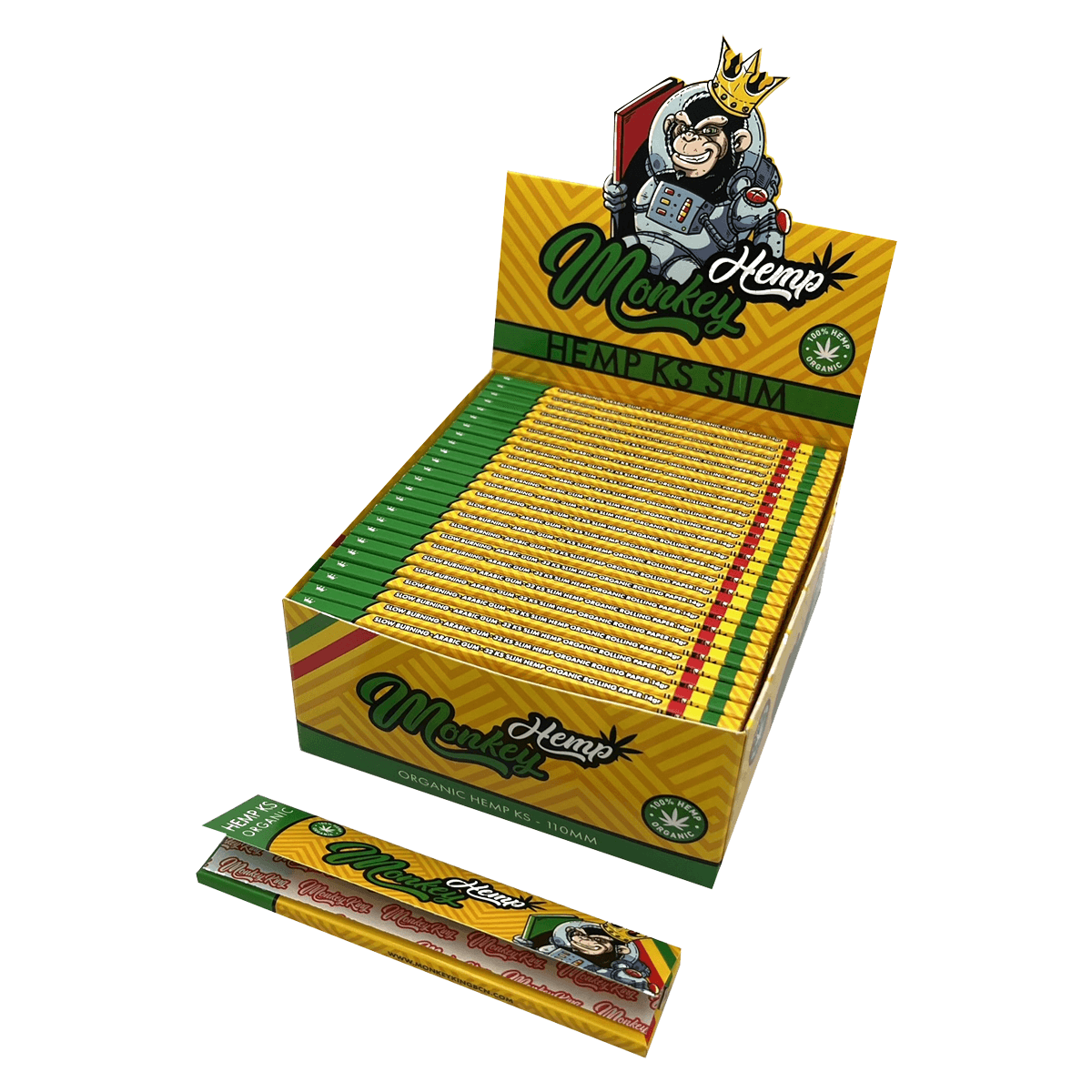
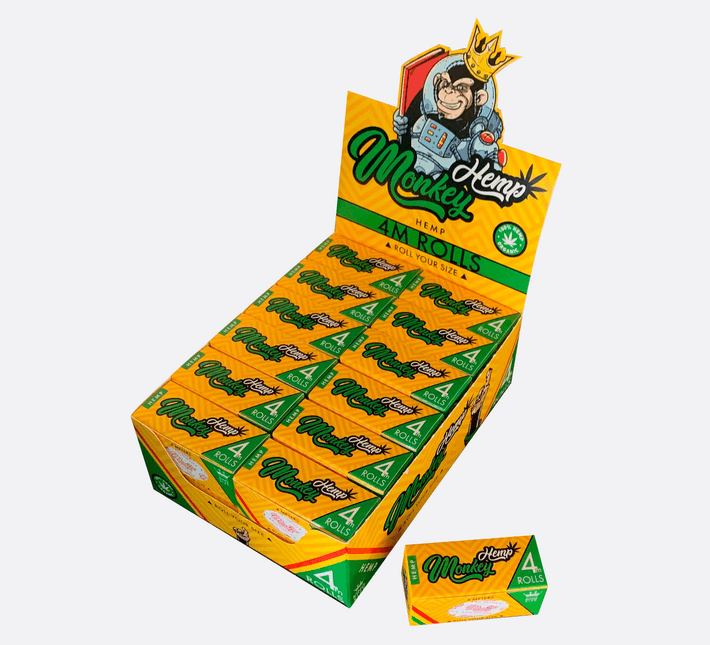
Monkey King's hemp papers are the straightforward everyday option and come in a 50-pack. Its ultra thin rolls are the continuous-roll format, which lets you tear whatever length you want rather than working to a fixed leaf. Juicy Jay's paper rolls do the same in a flavoured version. None of those has CBD in the gum.
| Product | Format | CBD in the gum | Notable |
|---|---|---|---|
| ROOR CBD Gum papers, this page | King size slim booklets | Yes, quantity unpublished | Patented gum, made in France |
| Monkey King Hemp Rolling Papers | Booklets, 50 pack | No | The everyday hemp option |
| Monkey King King Size Ultra Thin Rolls | 4m continuous roll | No | Tear any length you want |
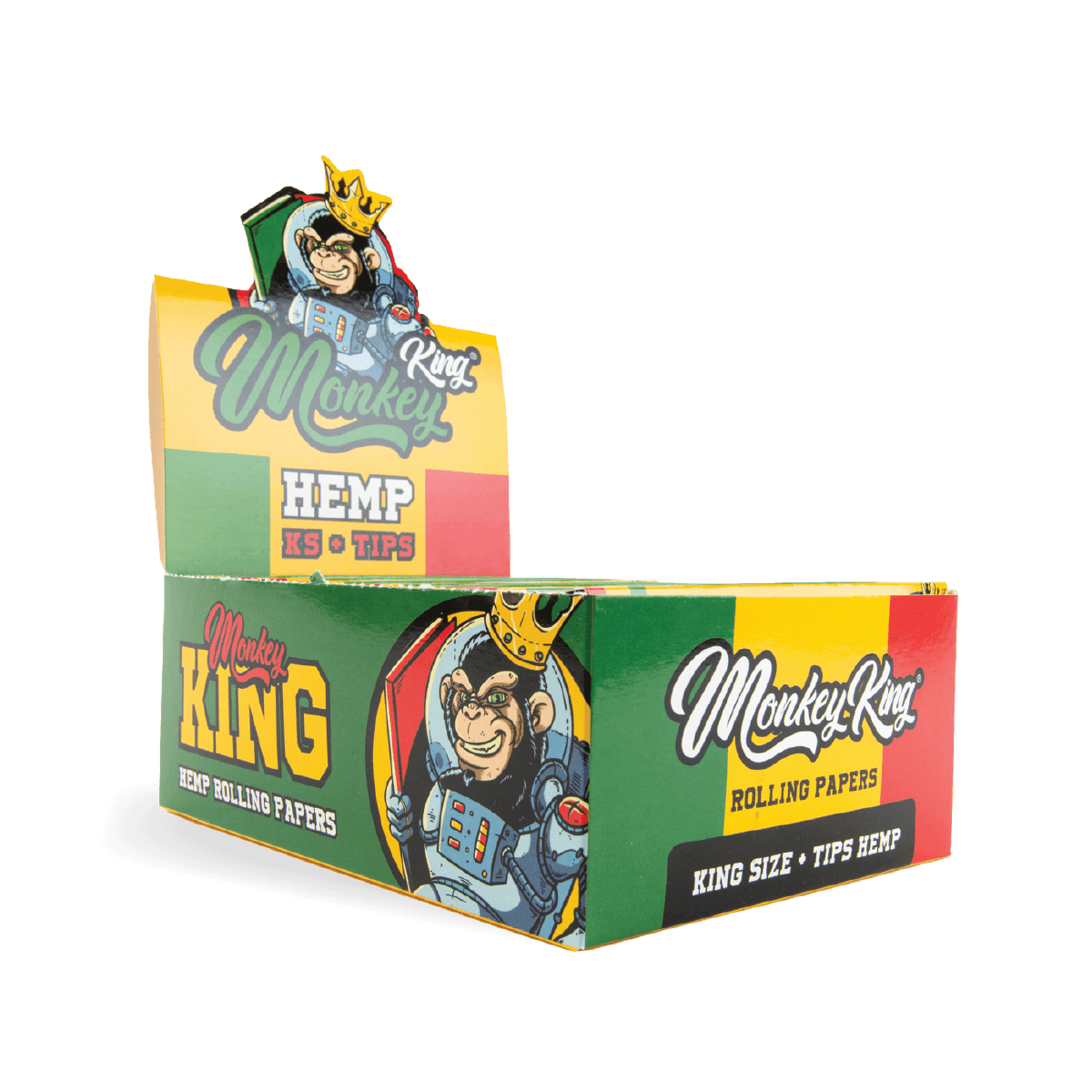
| Monkey King Rolling Papers and Tips | Booklets with tips, 24 pack | No | Tips included |
| Juicy Jay's Hemp Paper Rolls | Continuous roll | No | Flavoured hemp paper |
Who should buy something else
If you are buying these for the CBD, think carefully. Nobody publishes how much is in the gum, nobody publishes what survives being burned, and the strip is a small fraction of the paper. Buy them because they are excellent French papers with an interesting gum, not because you expect a cannabinoid dose from them. If you want CBD, the oil and gummy aisles are linked below and they come with stated milligrams.
If you have never rolled with an ultra thin paper, do not start with the rice. It is the thinnest and least forgiving of the three, and the hemp option is the one that survives learning.
If you want a single booklet rather than 50, this is the wrong listing. Ask us before committing to a box.
And if you need tips supplied, we cannot confirm that this listing includes them, so either buy tips separately or choose one of the Monkey King listings that definitely has them.
Frequently asked questions
- Where exactly is the CBD in a ROOR CBD paper?
- In the gum strip, not in the leaf. ROOR infuses CBD into the vegan acacia gum used to seal the paper, which is the process it holds a patent for. The leaf itself is ordinary ROOR paper in whichever material you choose, so the cannabinoid sits in one narrow band of adhesive.
- How much CBD is in ROOR CBD gum rolling papers?
- No party publishes a figure. We checked six retailer listings across the UK and Europe plus our own distributor and the brand's own material, and none states a content by weight, by percentage, per booklet or per leaf. There is no certificate of analysis for these papers either.
- Does the CBD survive being burned?
- Nobody has published anything on that, and we are not going to guess. The only claim the brand makes about the CBD staying put concerns licking the gum to seal it, which addresses saliva rather than heat. If you are buying these for the cannabinoid, that unanswered question is the one that matters.
- What is the difference between the hemp, rice and unbleached ROOR papers?
- The material of the leaf. Organic hemp is French grown and the sturdiest to handle. Rice comes from the Camargue, is GMO free, and is the thinnest and slowest burning but the least forgiving. Unbleached is wood fibre from sustainably managed forests. All three carry the same CBD gum.
- What does the watermark on a ROOR paper do?
- It controls the burn. The pattern is pressed into the leaf during manufacture and varies its density, which stops the paper running down one side. On an ultra thin paper that control matters more rather than less, so it is a functional feature rather than a decorative one.
- Why does no calcium carbonate matter on a rolling paper?
- Because chalk is used as a filler and whitener in lower-grade papers, and it adds to what you inhale without adding anything you want. These papers contain none, along with no dyes and no additives, which is a genuine specification rather than a marketing line.
- Are ROOR CBD papers covered by FSA Novel Foods?
- No. Novel Foods governs ingestible CBD such as oils, gummies, capsules and drinks, and no rolling paper appears on the FSA public list. These are not sold as a food or a supplement, and one trade listing states plainly that they are not to be consumed as a dietary supplement.
- Do ROOR CBD papers come with tips?
- It varies by seller and we have not confirmed it for this listing. Some retailers sell this line as papers and tips together, others as papers alone. Ask us before ordering if tips matter to you, or choose a listing that states tips are included rather than assuming.
Updated July 2026
Reviews
No reviews for ROOR CBD Gum Ultra Thin King Size Papers, box of 50 yet. We only publish feedback from people who have actually bought the product, so this stays empty until a real one arrives rather than being filled with anything we made up.
Bought this? Write a review
Write it here and we will check it against your order before it goes up. We publish the critical ones too, so long as they are from a real buyer.
Prefer not to use the form? Send it over instead:
More rolling papers
Papers, cones, wraps, tips