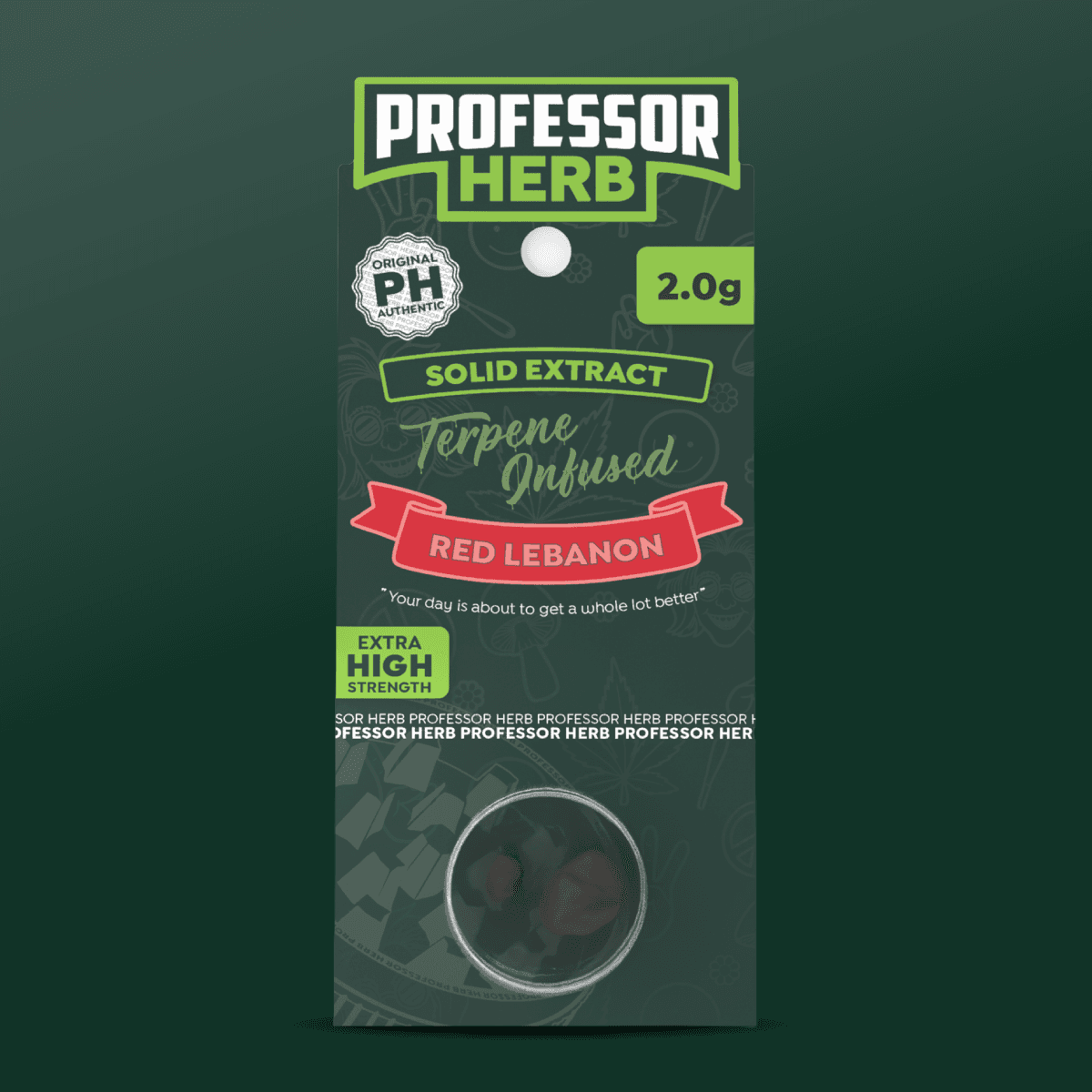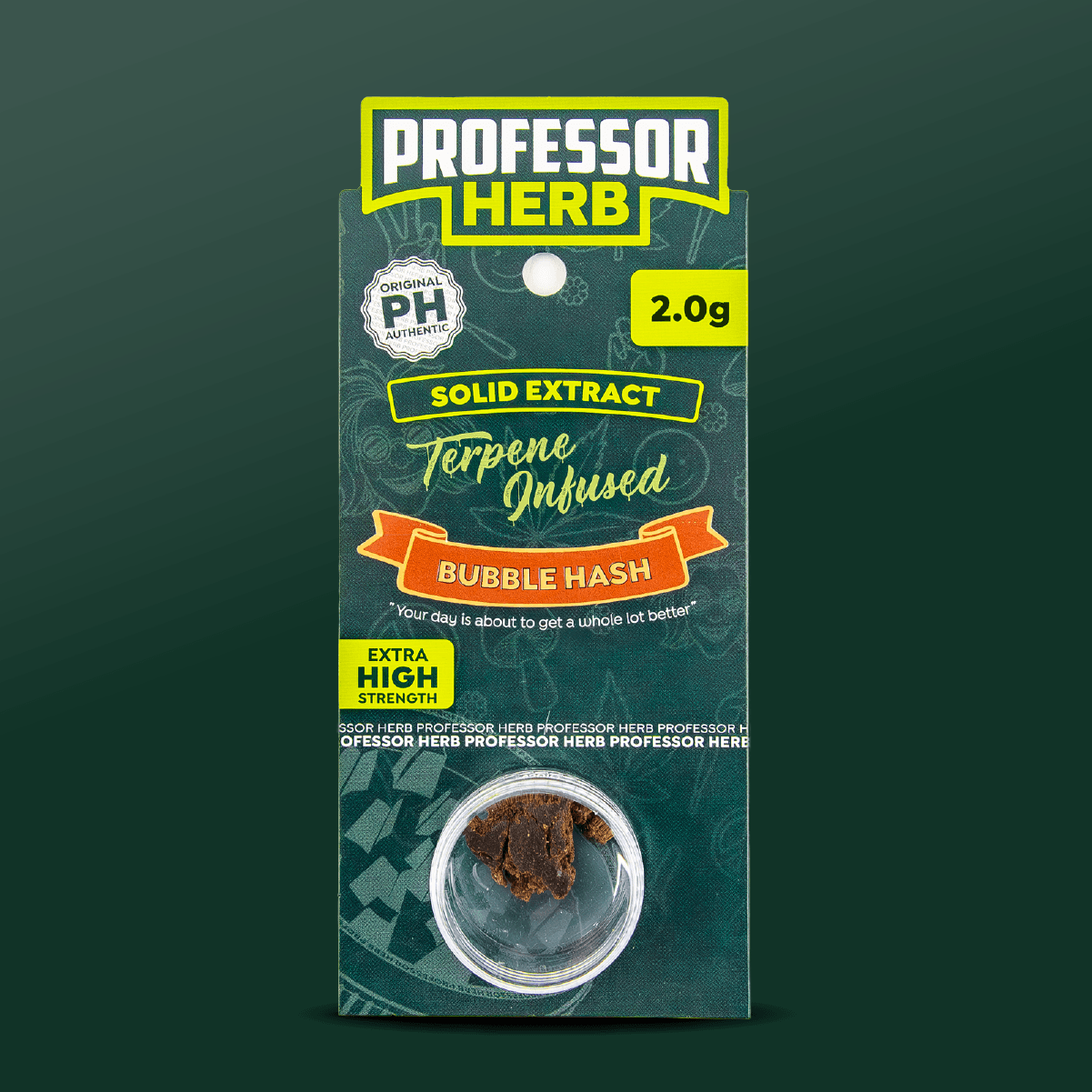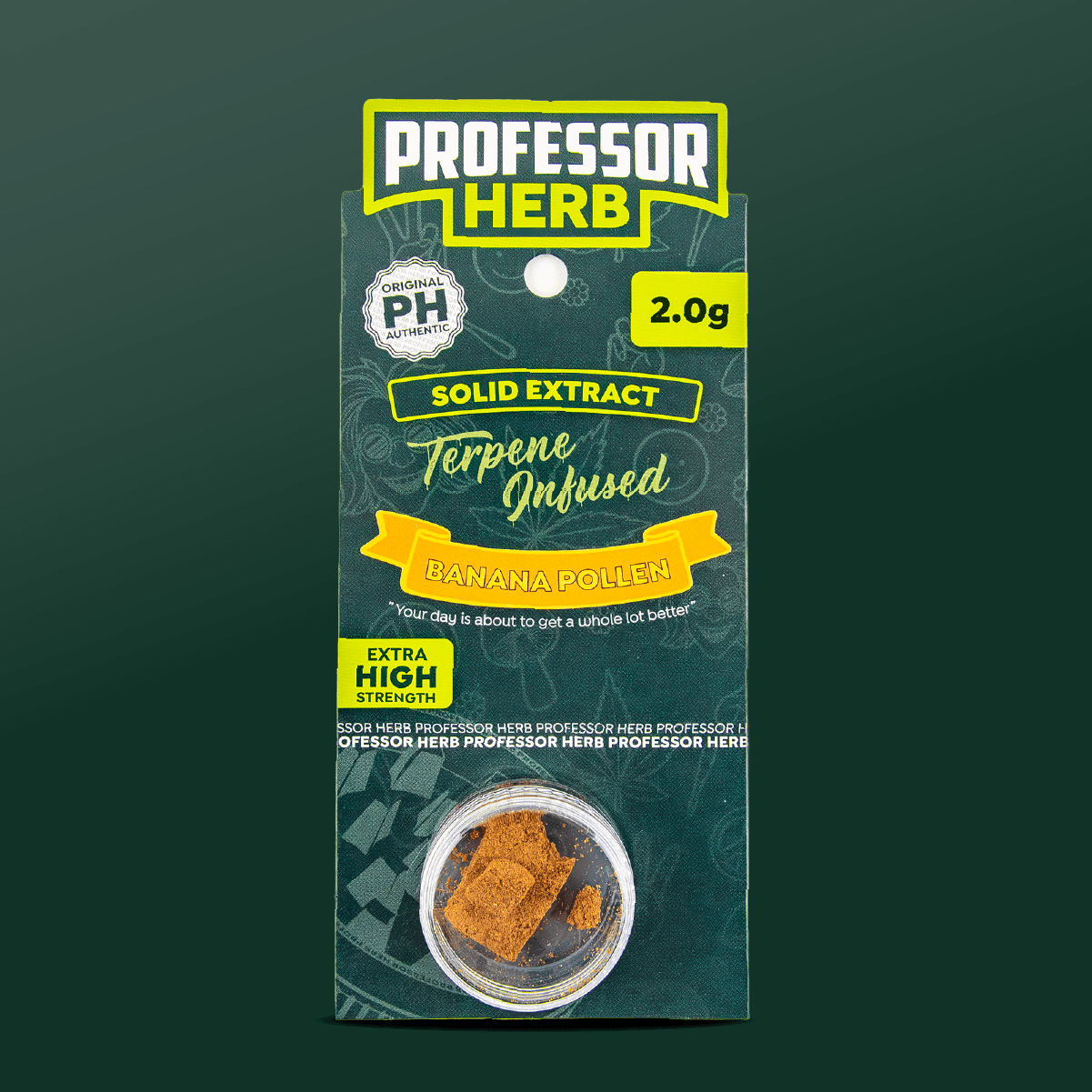
Professor Herb
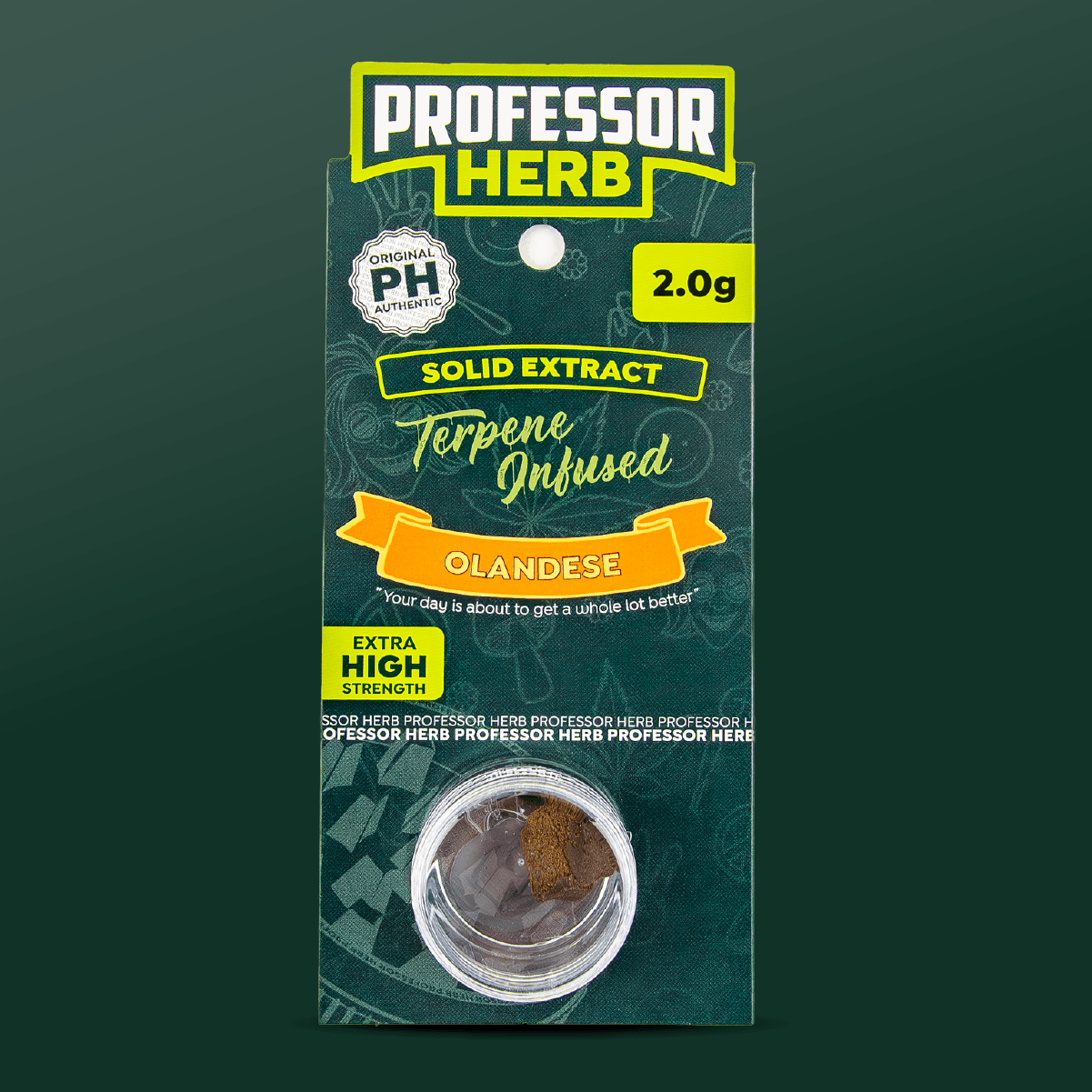
Professor Herb Hemp Solid Extract 2g, Olandese Hash 18%
£13.99
In stock — dispatched today if ordered by 3pm
A 2g solid hemp extract at a stated 18 per cent, named for the Dutch style and extracted in Italy from indoor-grown material. 18+ only.
- Free UK delivery on orders over £30
- Third-party lab-tested — COA on every batch
- Discreet plain packaging, no branding outside
- Sold to over-18s only, age-checked at checkout
Professor Herb Hemp Solid Extract 2g Olandese Hash 18% is a solid hemp extract in a 2g pot, extracted in Italy from indoor-grown material and stated at 18 per cent. Olandese is simply the Italian word for Dutch. That makes it the odd one out in this range, because unlike Morocco or Lebanon, the Netherlands has no tradition of growing and pressing hash at all. What it has instead turns out to matter more.
Holland did not give hash a tradition, it gave it the equipment
Every other name in this five-product range points at something concrete. Moroccan and Red Lebanon name regions with centuries of production behind them. Bubble names a separation method. Pollen names a grade of sifted resin.
Dutch names none of those, because there is no Dutch hash-making region in that sense. The Netherlands imported hash rather than producing it, and its cannabis reputation was built on retail tolerance and on breeding rather than on pressing resin in the hills.
What came out of Amsterdam instead was the hardware, and most of the story belongs to one person. Mila Jansen, known throughout the trade as the Queen of Hash, built the machines that turned resin separation from a craft into something anybody could do repeatably.
Her first was the Pollinator, in 1994: a mechanical dry-sift machine, the first of its kind aimed at cannabis, and enough of a novelty to be written up in High Times that year. Until then sifting was done by hand over screens, which worked but produced whatever it produced.
The second is the one that changed everything. In 1998 she introduced the Ice-O-Lator: nylon bags with sieves set into the base, so that when plant material is agitated in ice water the resin sinks through the mesh while the lighter plant matter floats. Ice-water extraction existed before that, but as a homemade technique with no standard method and no way to compare one person's results with another's. Jansen turned it into a kit of graduated filter bags, and the bags premiered at the 1998 Cannabis Cup. She followed it with the Bubbleator in 2005.
Which means this pot and the one next to it are the same story
Here is the part worth stopping on. Professor Herb sells a Bubble Hash in this same range, on this same shelf, in the same 2g format. Bubble hash is made with graduated mesh bags in ice water, and those bags are direct descendants of the Ice-O-Lator.
We wrote about those bags on our Bubble Hash page: how the different mesh sizes catch different fractions, and why what a producer keeps determines the grade. That page explains how the system works. This one is where the system came from.
So the Dutch name and the bubble name in a single range are not two unrelated references. They are the same piece of history seen from opposite ends: one named after the country that built the equipment, the other named after what the equipment does. Nobody selling either of them mentions it.
One thing to be clear about, because dates and awards are easy to blur. The 1998 Cannabis Cup appearance belongs to Jansen's bags, not to this product or to anything else we sell. It is history that explains a name, not a credential attached to a pot of hash.
| Year | What it changed | |
|---|---|---|
| The Pollinator | 1994 | First mechanical dry-sift machine for cannabis, replacing hand sieving |
| The Ice-O-Lator | 1998 | Turned ice-water extraction from a homemade technique into a standard kit of graduated bags |
| The Bubbleator | 2005 | A machine built around the same ice-water principle |
| Today | [Bubble hash](/products/professor-herb-hemp-solid-extract-2g-bubble-hash-19) everywhere is made with descendants of those bags |
The one name in the range that accidentally tells the truth
A small thing that we enjoyed. This product is called Olandese rather than Dutch, and Olandese is Italian.
Professor Herb's solid extract range is grown and extracted in Italy. So of the five names on the shelf, four point somewhere other than where the product was actually made: Moroccan points at Morocco, Red Lebanon at Lebanon, Bubble at a method, and the pollen grades at a flavour. This one points at Holland, but only in Italian, and in doing so it quietly gives away where the pot was really filled.
We are not suggesting the brand meant anything by it. Italian producers naturally use the Italian word. It is simply the only name in the range where the language does more work than the meaning, and once you notice it you cannot stop noticing it.
It is also worth saying that the style name is present in this product's title as we receive it, which is not true of the Moroccan and Red Lebanon listings in the same range. Those two arrive with the style filed separately and the title reduced to a percentage, so the fault in our supplier feed is real but not universal.
What is actually in the pot
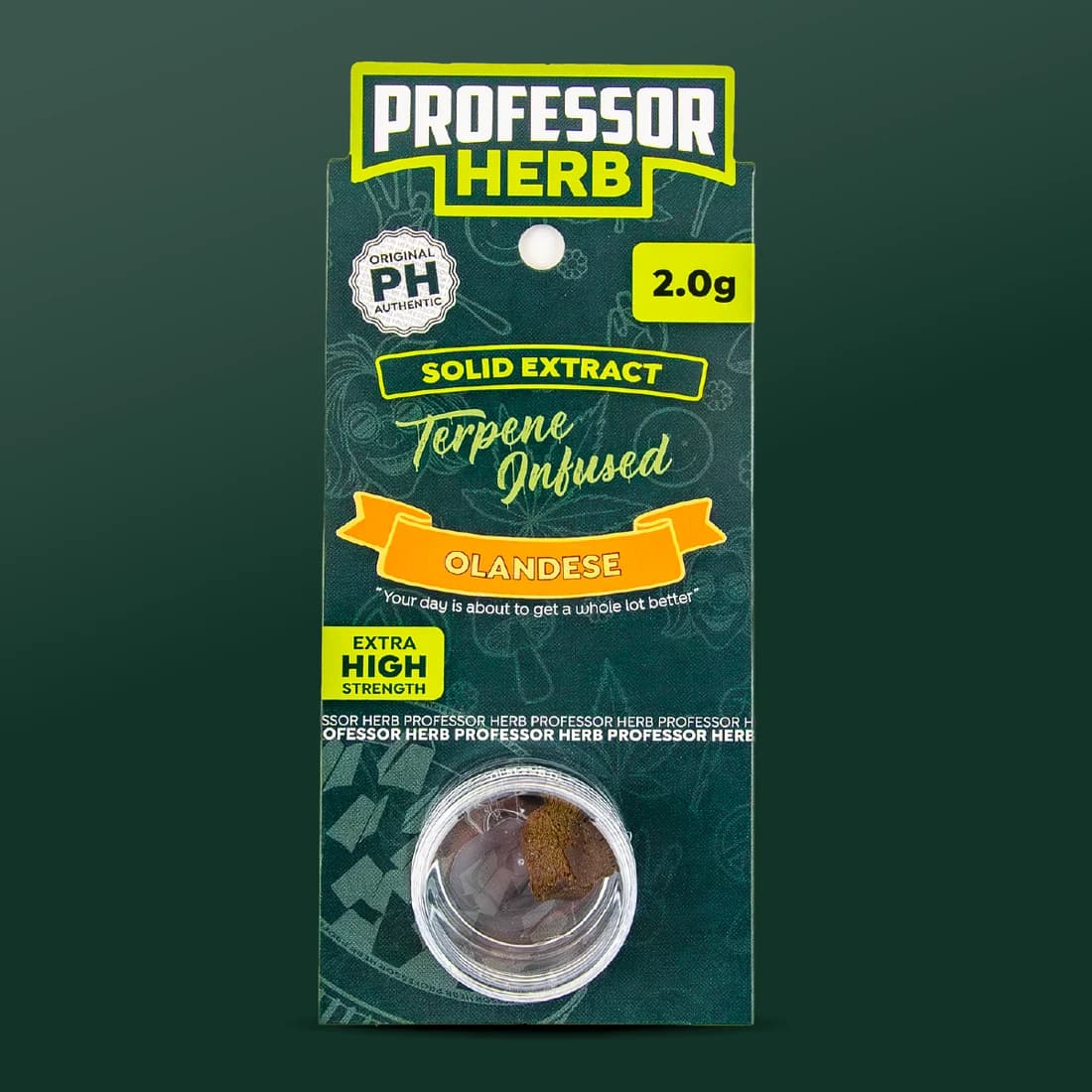
A firm, pressed solid extract, noticeably lighter and more golden in colour than the Moroccan and Red Lebanon grades in the same range, which both run dark. At a stated 18 per cent it sits third of the five, between the Red Lebanon at 17 and the Bubble at 19.
The character is cleaner and less earthy than the aged Lebanese style. There is a sweeter, more resinous quality to it and a lighter aroma that does not fill a room the way the darker grades do. Nothing has been added, so what you get comes from the material and the handling rather than from an infused profile.
The colour is worth a note given what we have written elsewhere. On our Bubble Hash page we set out that lighter tends to indicate cleaner material, and on our Red Lebanon page we qualified that by pointing out the rule inverts where darkness is the deliberate result of ageing. This one falls on the straightforward side of that distinction: it is a lighter grade in a style where lighter is what you would expect, rather than a dark one that needs explaining.
As always we would not grade a product from a marketing photograph, and the reliable tests are the ones you apply to what arrives.
| Product | Named for | Stated |
|---|---|---|
| [Banana Pollen Hash](/products/professor-herb-hemp-solid-extract-2g-banana-pollen-hash-15) | A sifted grade plus an added flavour | 15 per cent |
| [Red Lebanon Hash](/products/professor-herb-hemp-solid-extract-2g-hash-17) | A Lebanese tradition, sifted and aged | 17 per cent |
| Olandese Hash (this page) | The Dutch, who built the equipment | 18 per cent |
| [Bubble Hash](/products/professor-herb-hemp-solid-extract-2g-bubble-hash-19) | Ice-water separation, the method | 19 per cent |
| [Moroccan Hash](/products/professor-herb-hemp-solid-extract-2g-hash-22) | A Moroccan style, sifted and pressed | 22 per cent |
Before you order
Professor Herb runs a second solid extract line at the same 2g size containing H4CBD rather than CBD, and the two get shelved together and confused constantly. This is the hemp and CBD one. Our page on the H4CBD solid extract explains why they are not interchangeable.
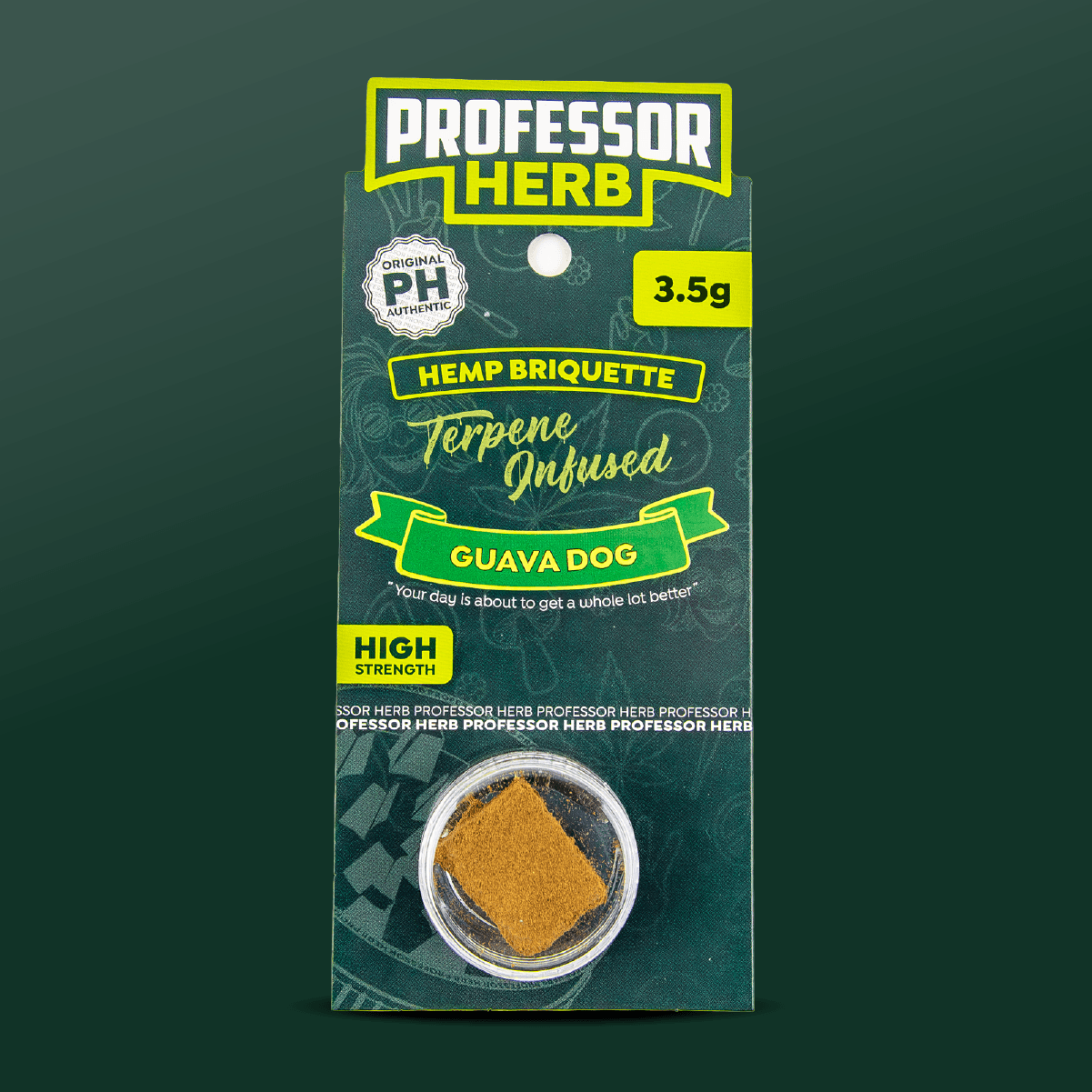
The pack carries a QR code linking to an analysis. Who runs that testing and which cannabinoids the panel covers is set out on our Guava Dog page.
This range is on our site on an explicit decision by the owner of this business. Smokable hemp sits outside the UK industrial hemp cultivation licence, which covers stalk and seed, and we would rather say so than leave it out.
Who should choose something else
If you want a flavoured product, nothing has been added here. The pollen grades and the briquette range are where the flavours are.
If you want the deep, aged, leathery character, this is the wrong end of the range and the Red Lebanon is what you are after.
If you want the highest stated figure in this range, the Moroccan at 22 per cent is the top of it.
If you were drawn in by the Dutch name expecting a product made in the Netherlands, it was made in Italy, and Olandese describes a style rather than an address.
Over-18s only. This is not a food and it is not a medicine, and nothing here should be read as suggesting otherwise.
Frequently asked questions
- What does Olandese mean on a hash pack?
- It is the Italian word for Dutch. On this product it refers to a Dutch style rather than to where anything was grown, since Professor Herb's solid extract range is grown and extracted in Italy. The choice of the Italian word rather than the English one is itself a small clue about where the pot was actually filled.
- Does the Netherlands have a traditional hash-making region?
- Not in the way Morocco or Lebanon do. The Netherlands historically imported hash rather than producing it, and its cannabis reputation was built on retail tolerance and on plant breeding. Its lasting contribution to hash was not a growing tradition but the equipment used to separate resin, which came out of Amsterdam and is now used worldwide.
- Who invented the bags used to make bubble hash?
- Mila Jansen, working in Amsterdam. She built the Pollinator, a mechanical dry-sift machine, in 1994, and in 1998 introduced the Ice-O-Lator: nylon bags with sieves in the base so resin sinks through the mesh while plant material floats. Ice-water extraction existed before that as an unstandardised homemade technique, and her graduated bag kit is what made it repeatable.
- Is the Olandese hash related to the Bubble Hash in the same range?
- By history rather than by process. Bubble hash is made with graduated mesh bags in ice water, and those bags descend directly from the Ice-O-Lator that came out of Amsterdam in 1998. So the Dutch name on one pot and the bubble name on the other are the same piece of history from two directions, one naming the country that built the equipment and the other naming what the equipment does.
- Why is the Olandese lighter in colour than the Moroccan and Red Lebanon?
- It is a different style and has not been aged the way a red Lebanese product is. Darkness in a Lebanese red is the deliberate result of months of ageing, whereas this sits on the more straightforward side of the colour question: a lighter grade in a style where lighter is what you would expect. We would not draw firm conclusions from a product photograph either way.
- Does 18 per cent make this a middle-of-the-range product?
- Third of five, yes. The range runs from 15 per cent for the flavoured pollen grades, through Red Lebanon at 17 and this at 18, up to Bubble at 19 and Moroccan at 22. The spread across the whole ladder is only seven points, so the differences between neighbouring grades are smaller than the different names might suggest.
- Did this product win a Cannabis Cup?
- No, and nothing on this page should be read that way. The 1998 Cannabis Cup appearance mentioned above belongs to Mila Jansen's Ice-O-Lator bags, which are equipment rather than a product we sell. It is history that explains where a name comes from, not a credential attached to this or any other pot of hash on our shelf.
- Why does the Olandese listing show its style name when the Moroccan one does not?
- Because the fault in our supplier feed is real but not universal. On this product the style name arrives inside the product title. On the Moroccan and Red Lebanon listings in the same range it arrives in a separate field, leaving the title as just a percentage, which is why those two pages carry a note about it and this one does not need to.
Updated July 2026
Reviews
No reviews for Professor Herb Hemp Solid Extract 2g, Olandese Hash 18% yet. We only publish feedback from people who have actually bought the product, so this stays empty until a real one arrives rather than being filled with anything we made up.
Bought this? Write a review
Write it here and we will check it against your order before it goes up. We publish the critical ones too, so long as they are from a real buyer.
Prefer not to use the form? Send it over instead:
More hemp & hash
Hash, solid extracts, shatter and pre-rolls