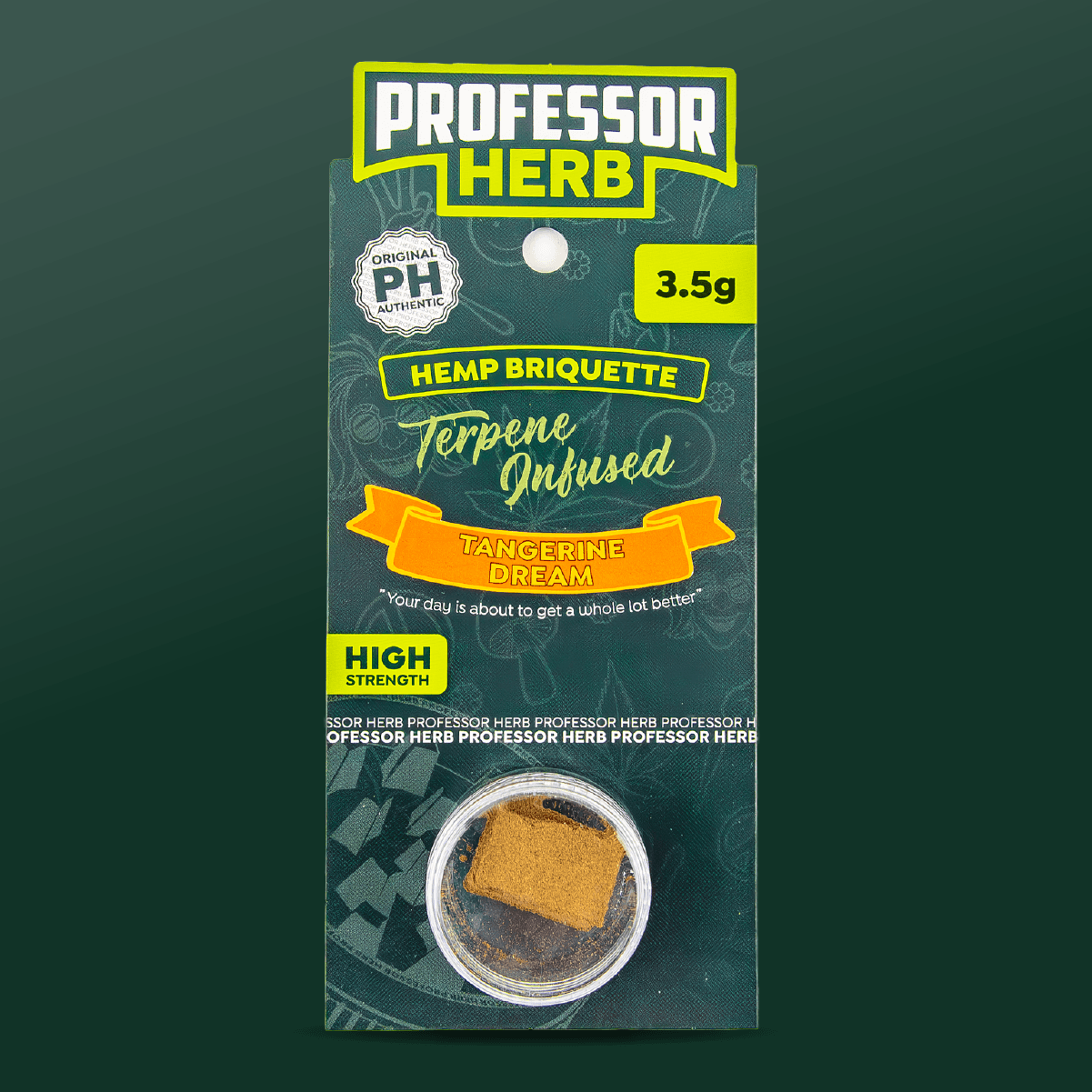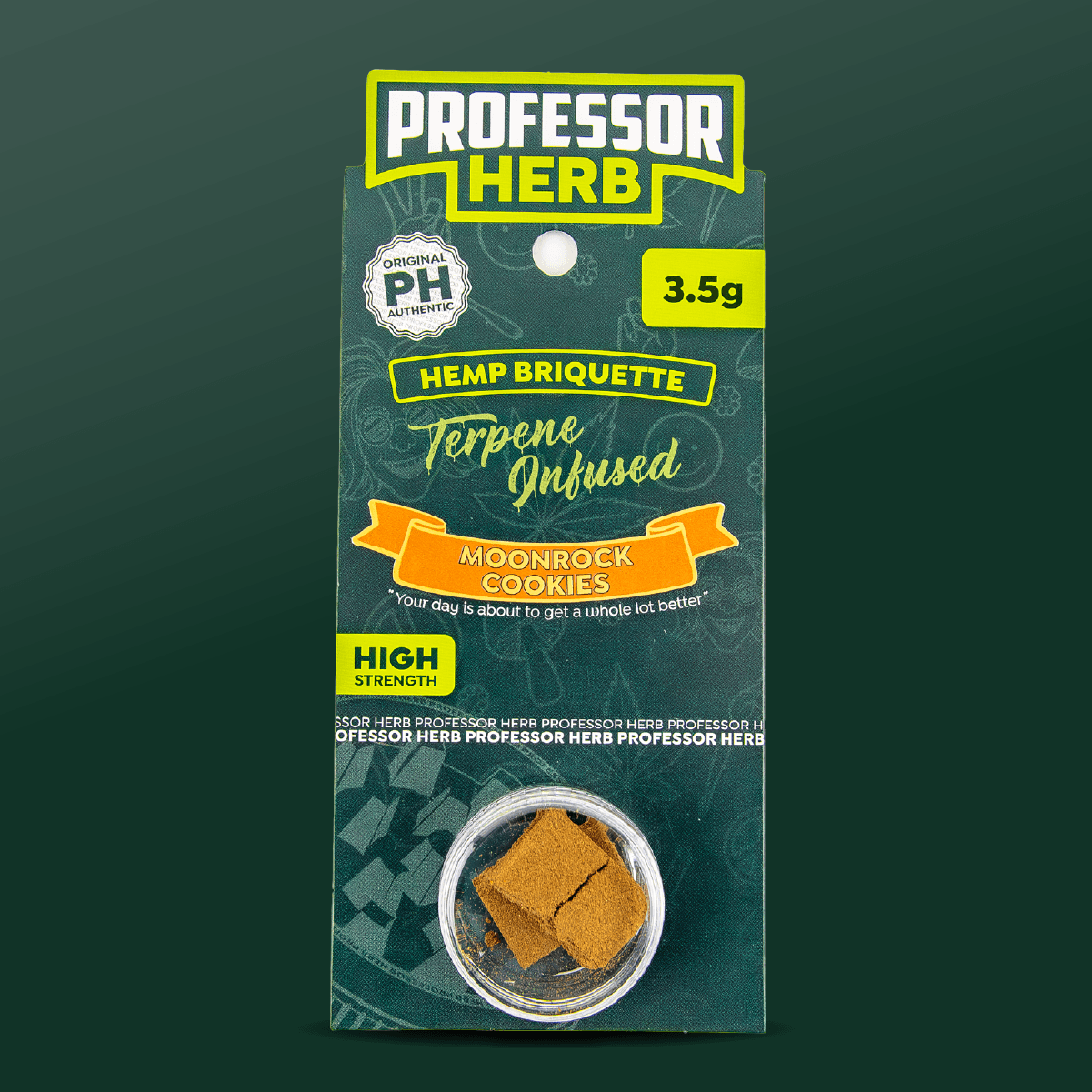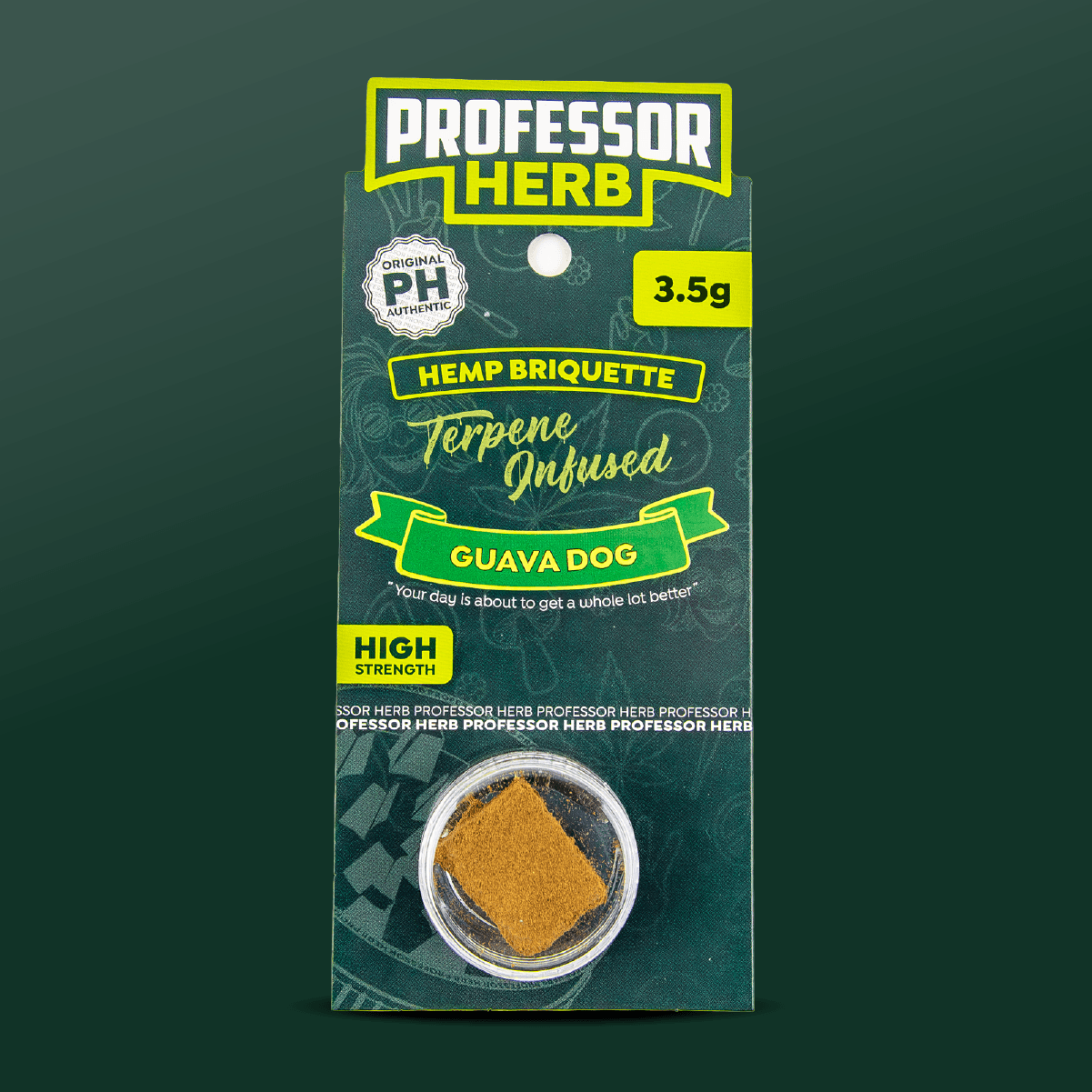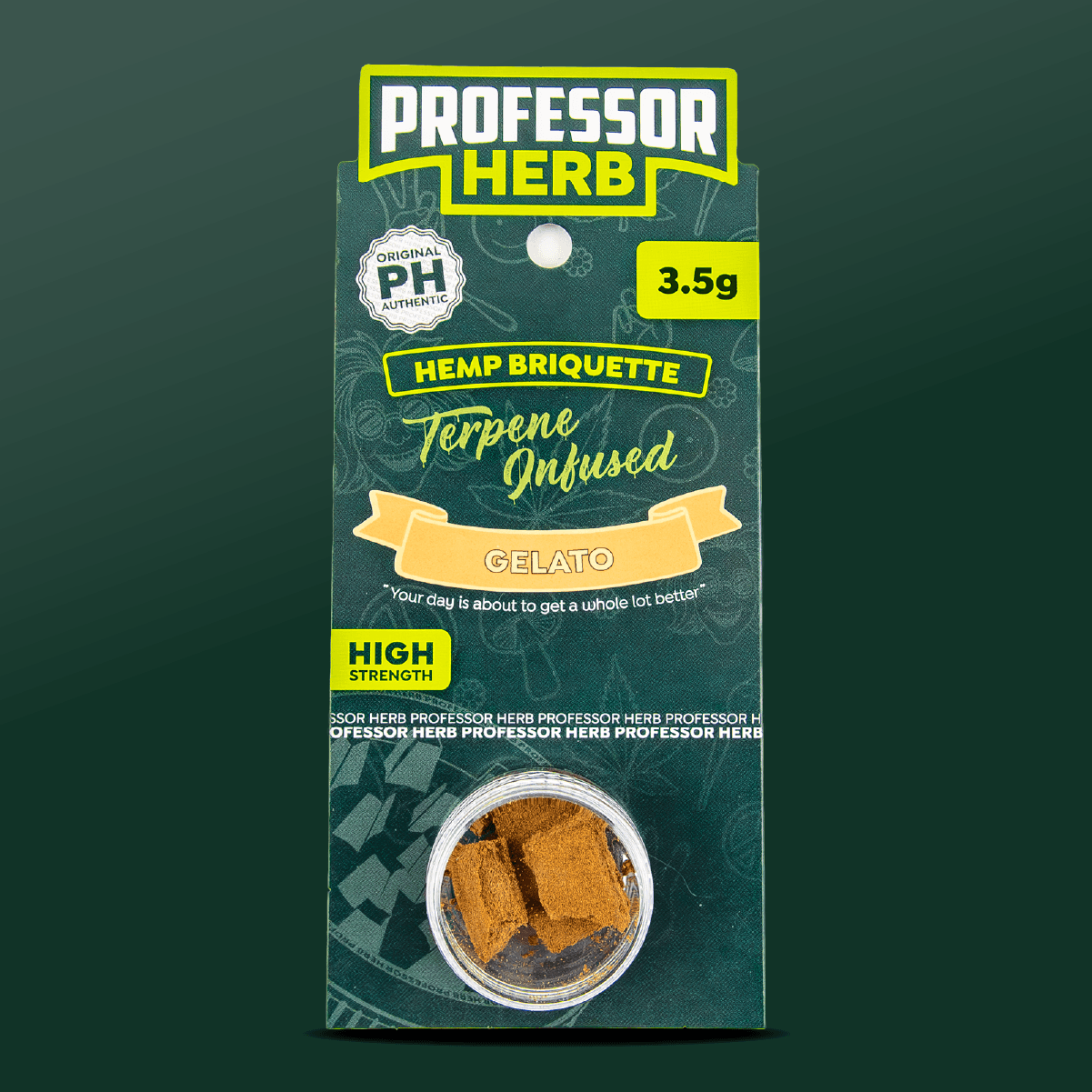
Professor Herb
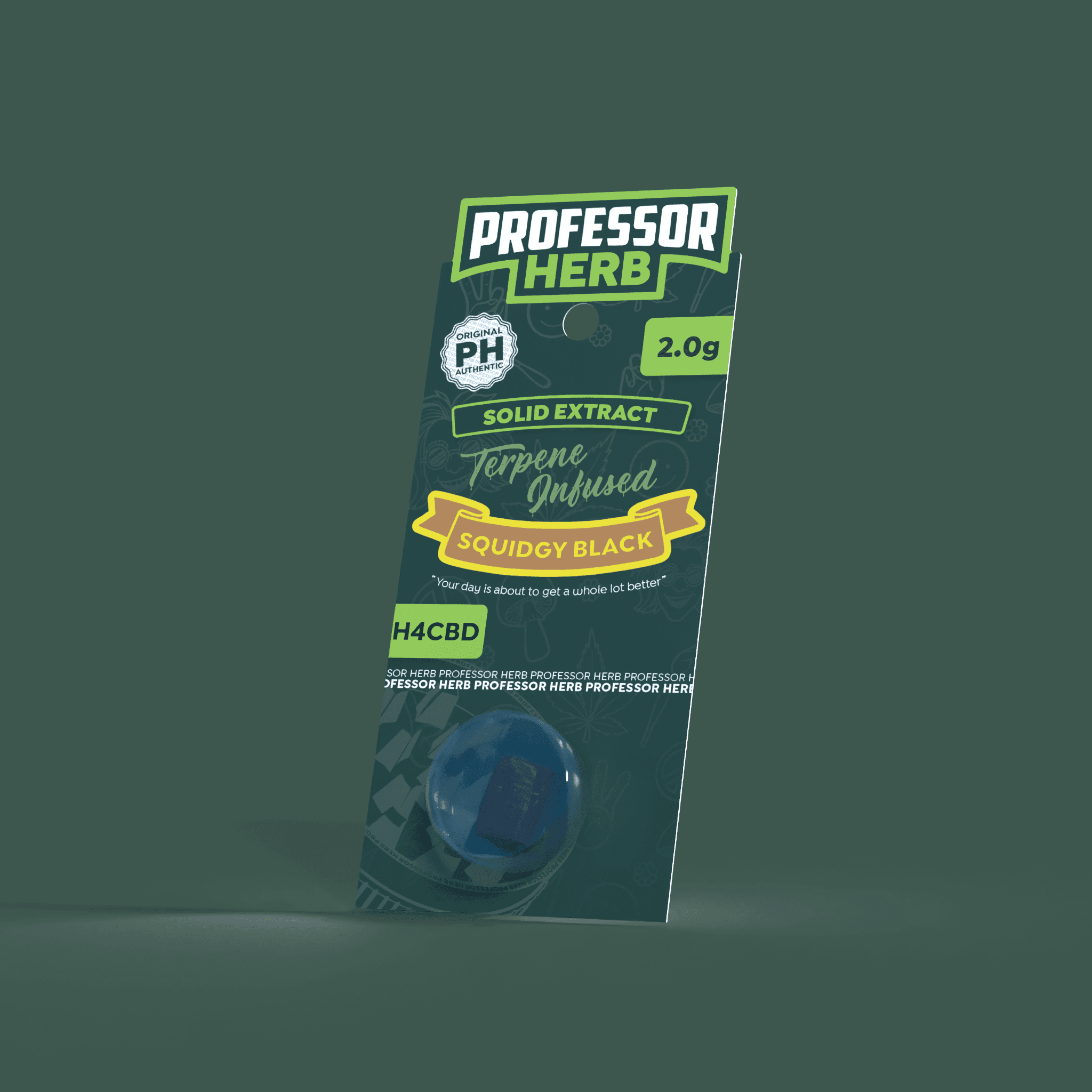
Professor Herb H4CBD Solid Extract 2.0g
£17.99
In stock — dispatched today if ordered by 3pm
A 2.0g terpene-infused solid extract made with H4CBD, a semi-synthetic cannabinoid produced by hydrogenating CBD. This is not CBD. 18+ only.
- Free UK delivery on orders over £30
- Third-party lab-tested — COA on every batch
- Discreet plain packaging, no branding outside
- Sold to over-18s only, age-checked at checkout
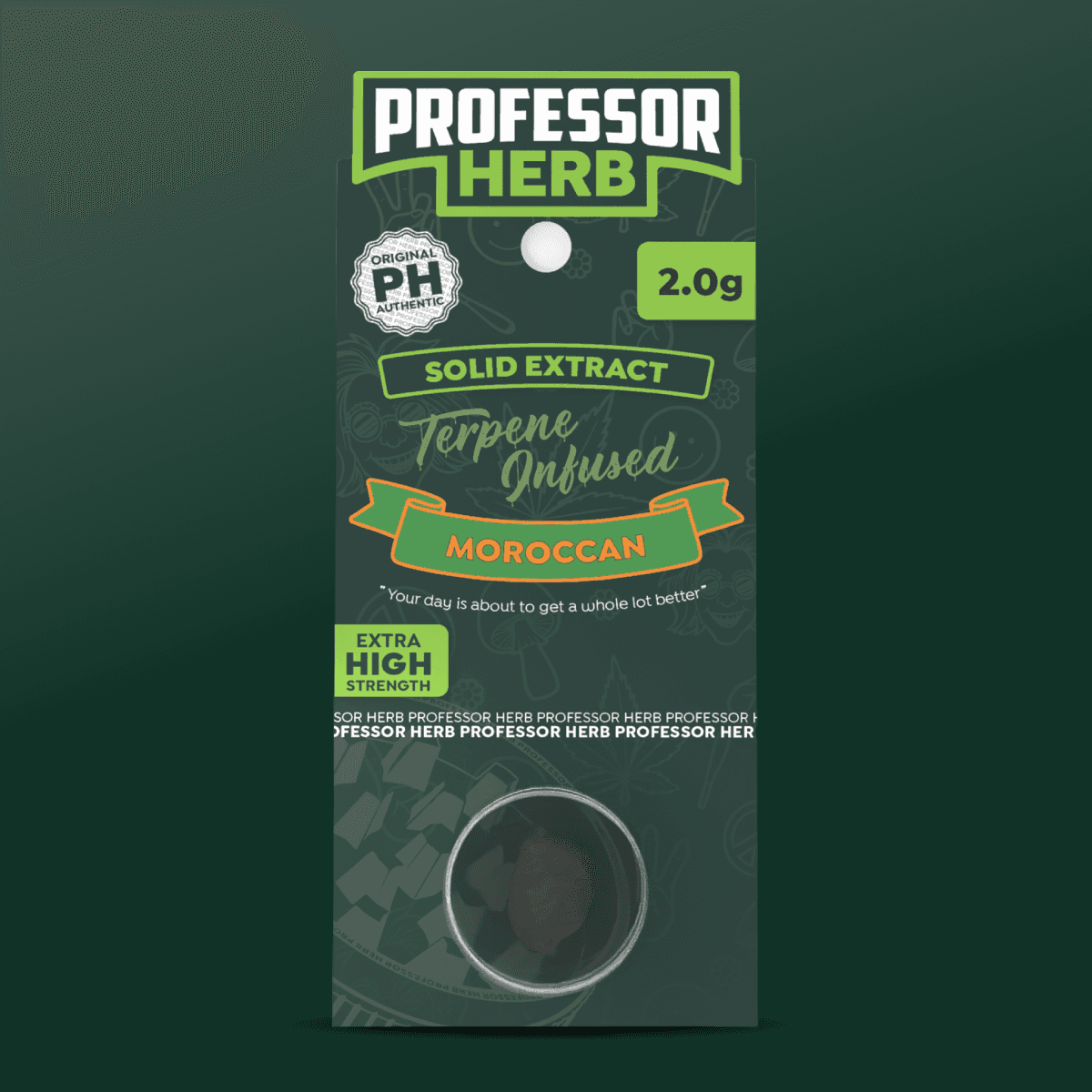
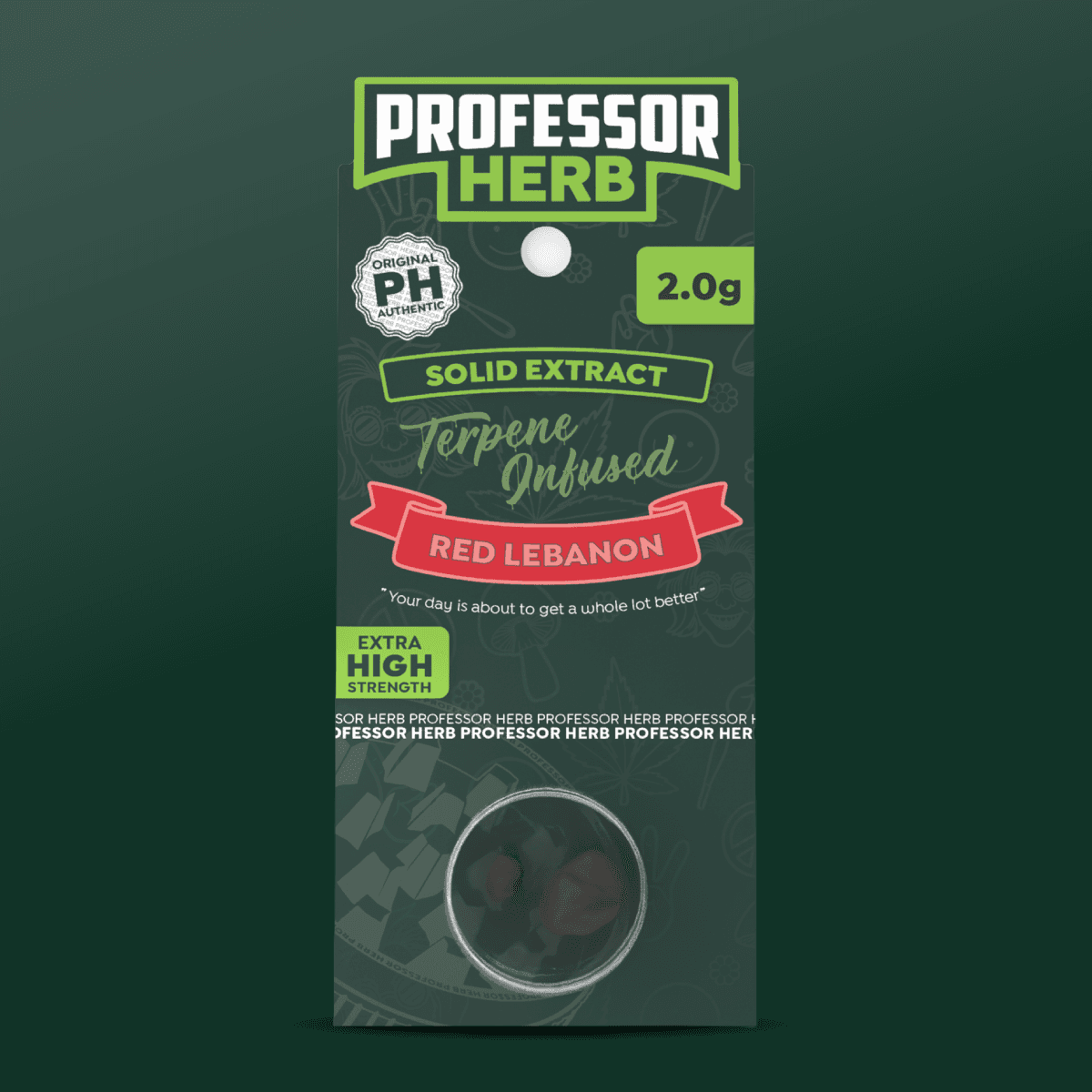
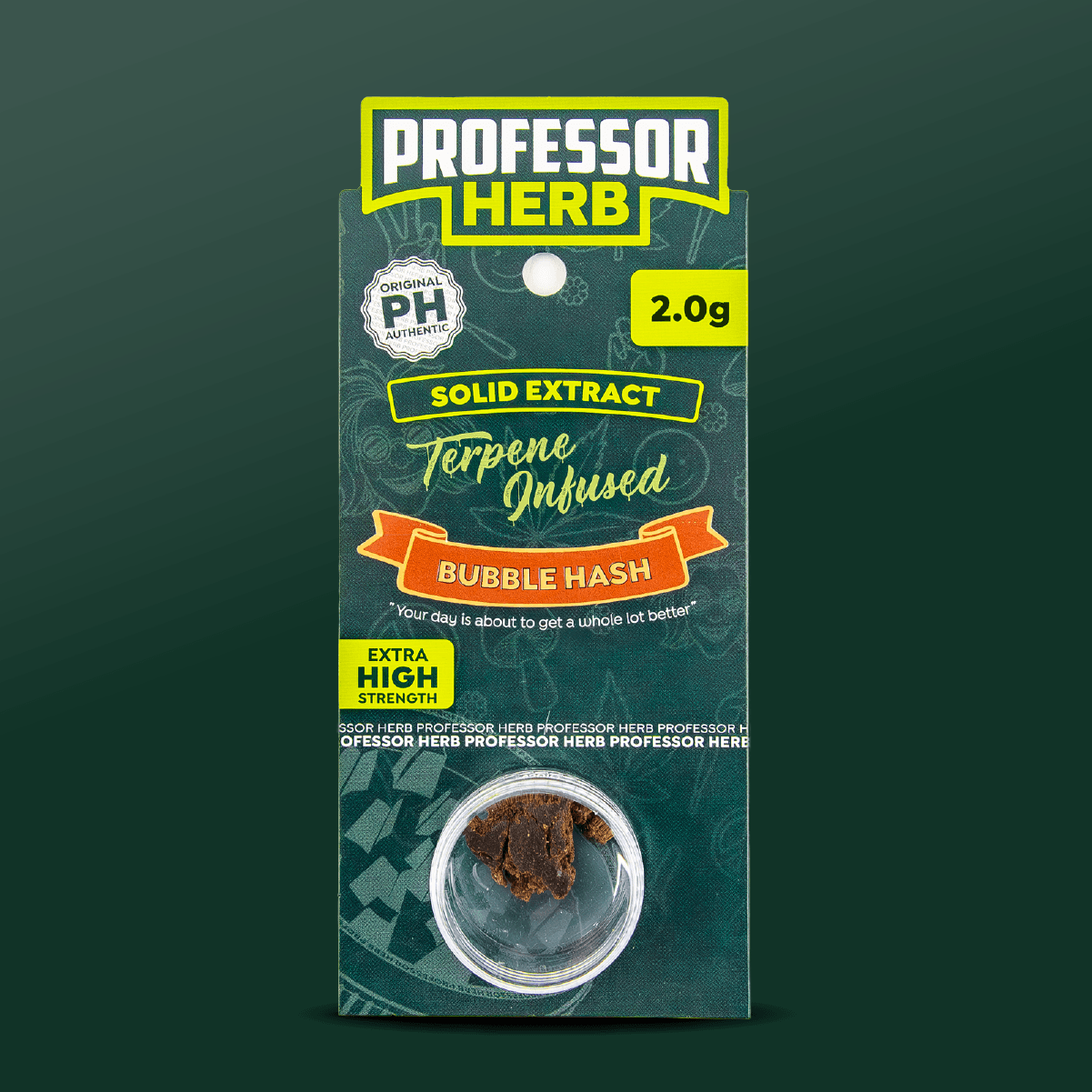
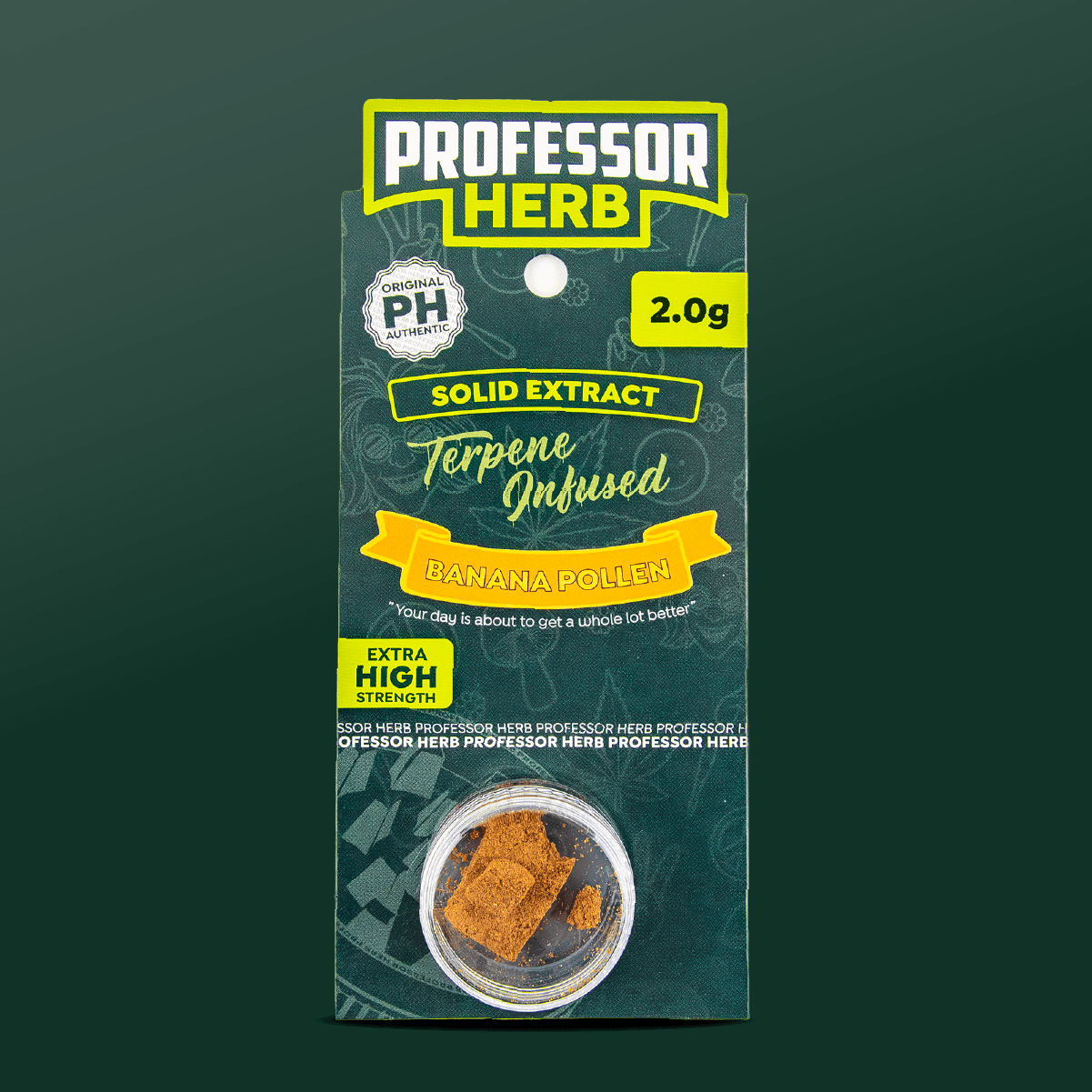
The Professor Herb H4CBD Solid Extract 2.0g is a terpene-infused pressed block made with H4CBD, a semi-synthetic cannabinoid produced by hydrogenating CBD in a laboratory. It is not CBD, and that matters more here than on almost any other product we stock, because Professor Herb sells a second solid extract range in the same 2g format that genuinely is CBD, and the two ranges share type names. One of them publishes a percentage and a milligram figure. This one publishes no strength figure at all. Telling them apart comes down to a small flash on the front of the pack.
Two ranges, one name, and how to tell them apart
This is the most important thing on the page, so it goes first.
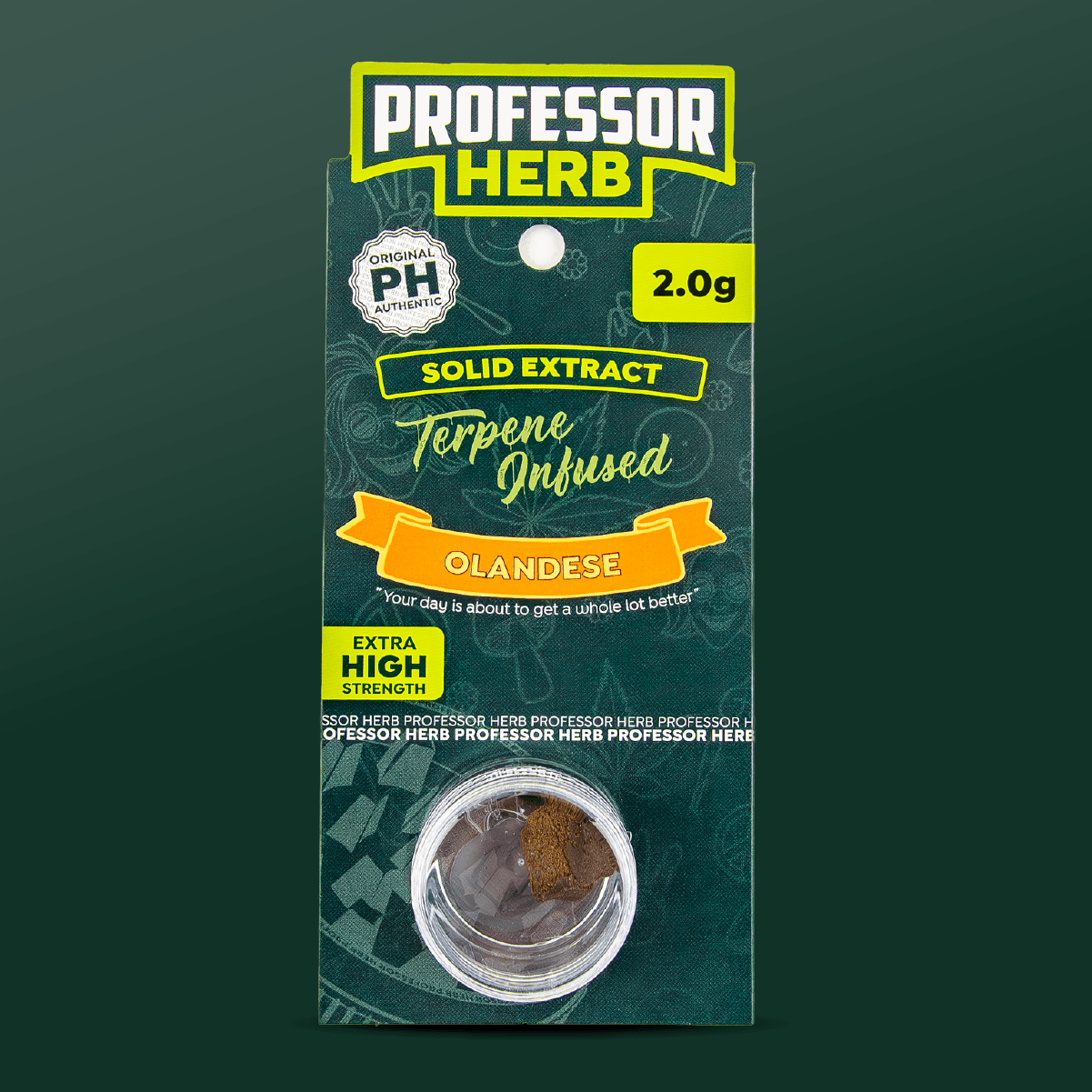
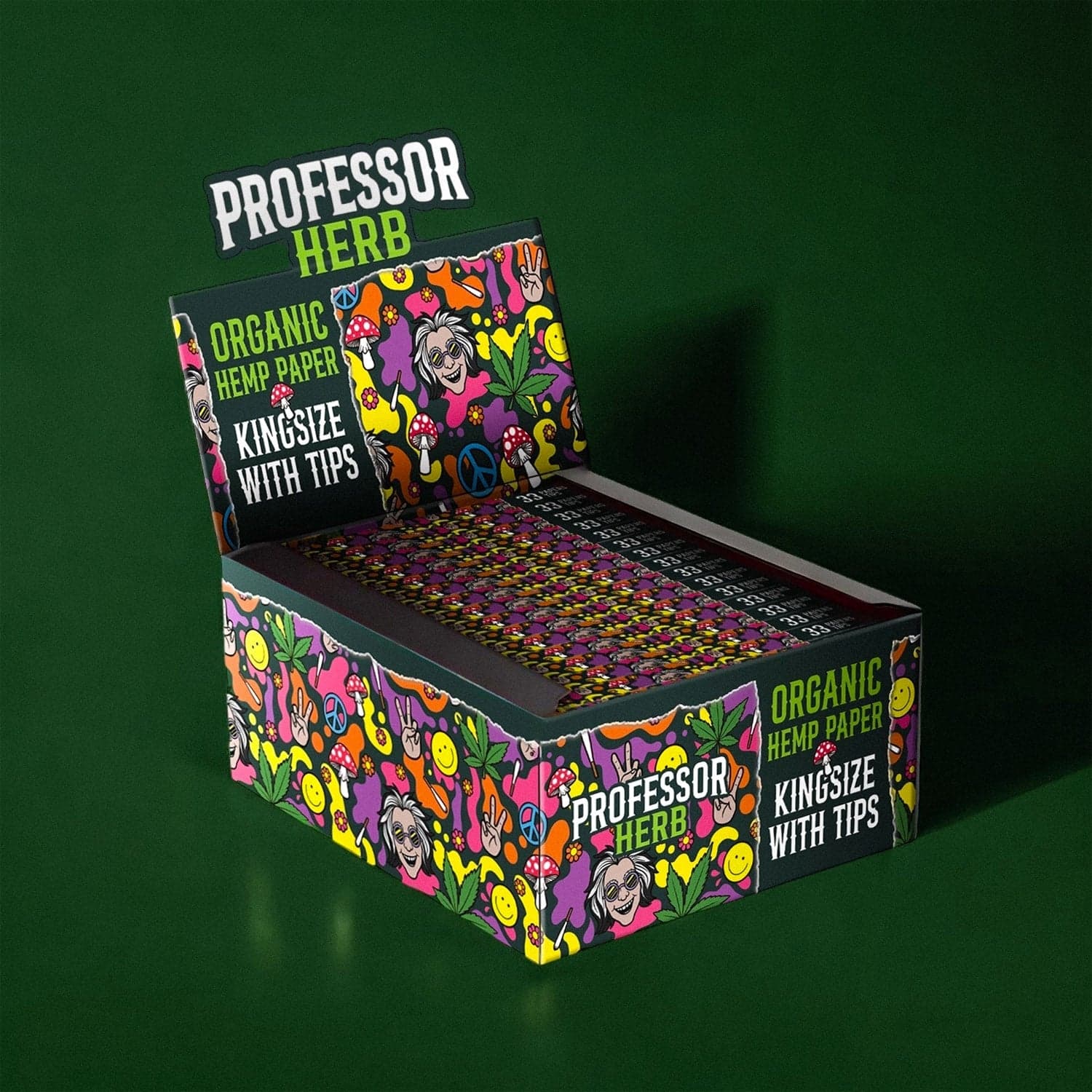
Professor Herb makes two separate 2g solid extract ranges. One is the Hemp Solid Extract range, which is cannabidiol, extracted in Italy from indoor-grown hemp, and sold in types including Moroccan Hash, Bubble Hash, Olandese Hash and Banana Pollen Hash. Every one of those carries a published percentage, and the Moroccan is stated at 22 per cent, which the brand itself converts to 440mg in the pouch.
The other is this one, the H4CBD Solid Extract range, sold in Gold Press, Moroccan, Squidgy Black and Red Lebanon. It contains a laboratory-made cannabinoid rather than a plant extract, and it publishes no percentage and no milligram figure anywhere. The strength descriptor is the phrase extreme high strength.
Read those two lists again and you will see the problem. Both ranges contain a Moroccan. Same brand, same 2g format, same word printed on the front, and a completely different substance inside.
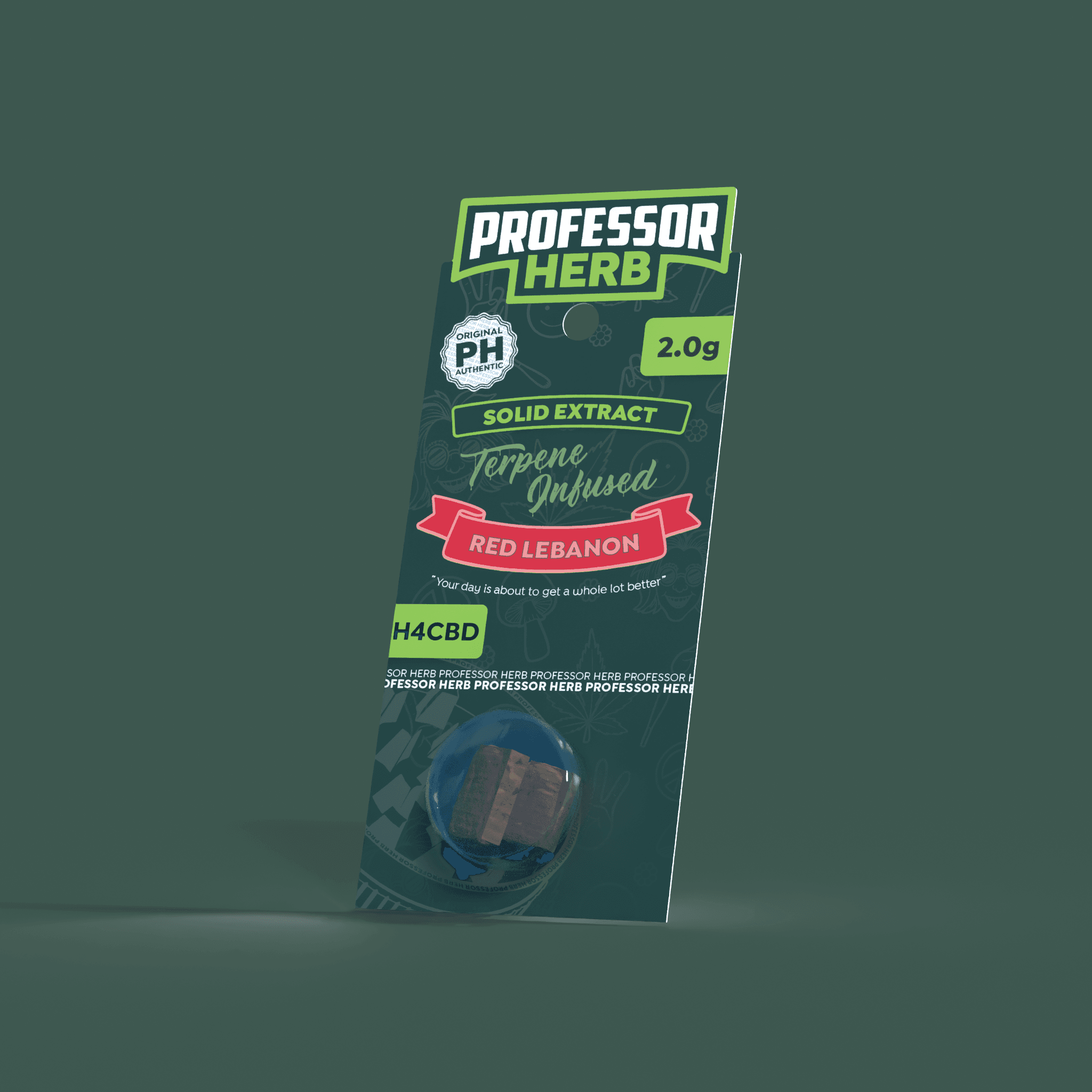
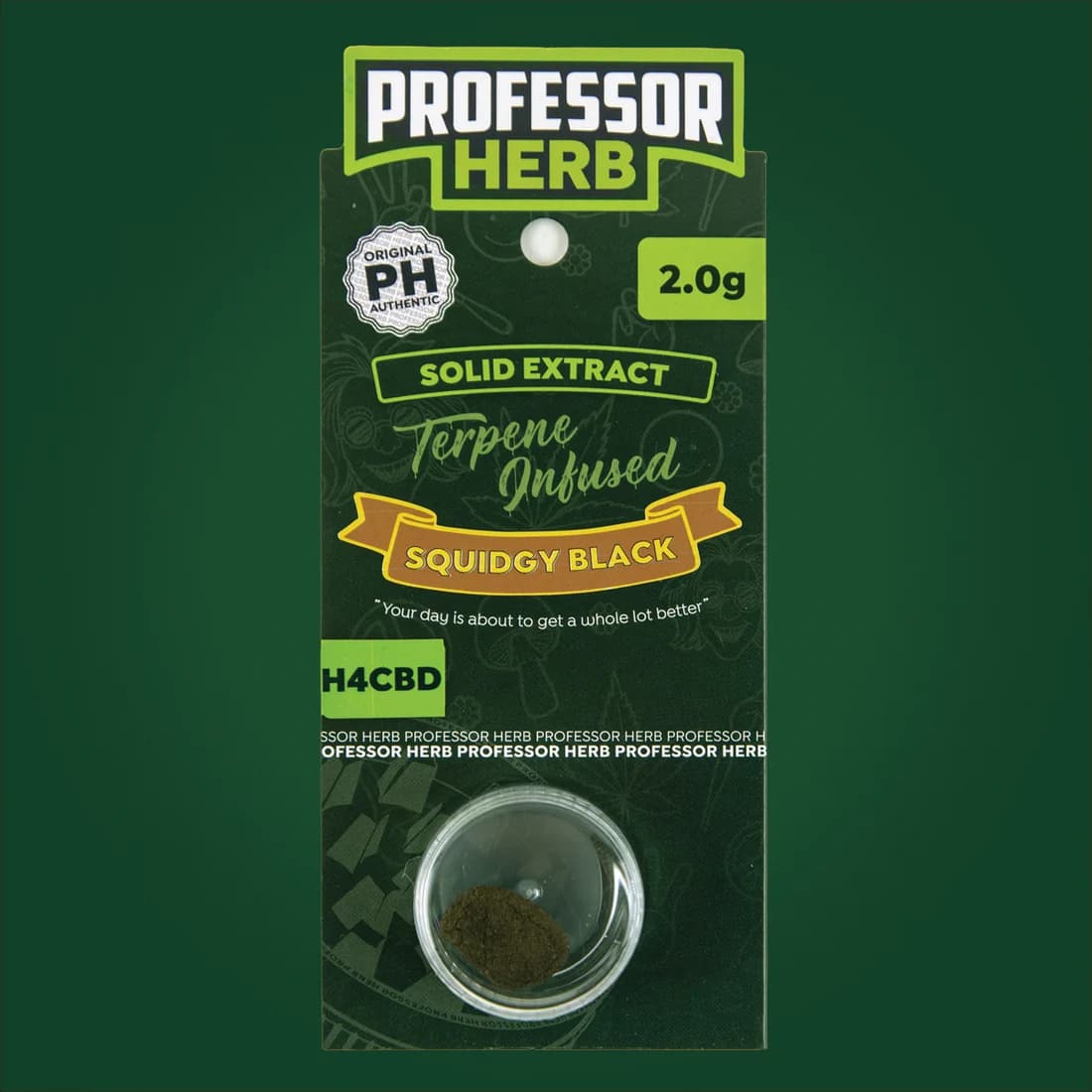
The only thing on the front of the pack that separates them is a small H4CBD flash in a green box near the bottom of the hanging card. It is not large and it is easy to miss on a shelf or in a thumbnail. If you take one thing from this page, make it that: on any Professor Herb solid extract, look for that flash before you assume you know what is in it. The image below shows exactly where it sits.
We stock both ranges, which is the only reason we are able to put them side by side like this. A brand site has no reason to draw the contrast and a shop carrying only one of them cannot.
| Hemp Solid Extract | H4CBD Solid Extract, this range | |
|---|---|---|
| Cannabinoid | CBD, a plant extract | H4CBD, made in a laboratory from CBD |
| Strength published | Yes, a percentage and a milligram figure | None of any kind |
| Example | Moroccan Hash at 22 per cent, stated as 440mg per pouch | Moroccan, described only as extreme high strength |
| Origin described as | Extracted in Italy from indoor-grown hemp | Hemp-derived ingredients and hydrogenation processes |
| Types | Moroccan Hash, Hash, Bubble, Olandese, Banana Pollen | Moroccan, Squidgy Black, Gold Press, Red Lebanon |
| Mark on the pack | No H4CBD flash | Small green H4CBD flash near the bottom |
| UK regulatory position | Settled ground for a compliant CBD product | Contested, and under review by the ACMD |
What H4CBD is, and the clearest way to picture it
H4CBD is hydrogenated cannabidiol. Chemists start with CBD, which the hemp plant does make, and add four hydrogen atoms to the molecule in a laboratory. The result is a compound the plant does not produce.
The most useful comparison, and one that comes from the chemistry literature rather than from marketing, is margarine. Hydrogenation is the same class of process used to turn liquid vegetable oil into a solid spread. You begin with something natural, run it through a chemical reaction, and end up with a substance that behaves differently and does not occur that way in nature. That is exactly what semi-synthetic means: a plant-derived starting material, deliberately altered.
Which is why the word natural does a lot of quiet work in this category. The hemp the CBD came from was grown in a field. What is in this pack was made in a reactor.
We have written the longer account in our guide to what H4CBD is, including its contested legal position and where the widely repeated claim about it being a hundred times stronger than CBD actually comes from. It is worth reading before you buy anything in this part of the range.
Why this is not hash, and why that changes the question
It is sold in a hash format, it looks like hash, and shops describe it as hash. It is not hash in the sense the word normally carries, and the difference is not pedantry.
Traditional hash is separated resin. The sticky material on the surface of the flowers is collected and pressed, so what you end up with came off a plant and nothing was added to it. That is what makes hash hash, and it is also what puts it squarely inside a specific piece of UK law, which we set out in full on the briquette hash page.
This is a different object entirely. The cannabinoid was manufactured from isolated CBD, then combined with terpenes and pressed into a block. Nothing was separated from a plant. It is a made compound in a hash shape.
So the legal question changes with it. The resin analysis that applies to a genuine pressed hemp hash does not straightforwardly apply to a manufactured cannabinoid, because there is no separated plant resin to analyse. What applies instead is the question that hangs over every H4CBD product: whether a laboratory-made cannabinoid sold for its effect falls within the Psychoactive Substances Act 2016. That position is genuinely contested and the Advisory Council on the Misuse of Drugs is reviewing it.
For completeness, since it appears on both ranges: Novel Foods governs what you eat and drink, and this is not a food, so that regime is not the live test here either. H4CBD holds no Novel Foods authorisation, and that matters for the H4CBD products you swallow rather than for this one.
We are not telling you this product is unlawful. We are telling you the reassurance printed on it addresses a different question from the one it raises.
The strength figure that is not there
Here is a pattern worth noticing across this brand's own shelves.
The CBD solid extracts carry a percentage on every type, and the brand converts it into milligrams for you. The H4CBD extracts carry no percentage, no milligram figure and no total. What they carry instead is the phrase extreme high strength.
So the substance with decades of research behind it is sold with a number, and the substance introduced to the market recently, with far less known about it, is sold with an adjective. That is the wrong way round, and no page selling it remarks on it.
The same asymmetry runs through the effect claims. Professor Herb describes its CBD solid extract as a non-psychoactive substance offering no psychoactive effects. On its H4CBD collection page the same company describes the range as delivering a noticeably stronger effect for most users. Both statements come from the same brand about products sitting next to each other, and they point in opposite directions.
Our position follows from that. We are not going to publish a strength figure for this product, because the manufacturer does not publish one and we are not going to invent or estimate one. If the quantity matters to your purchase, ask us and we will tell you exactly what documentation we hold from our distributor.
The three types we list here, and the fourth
The range runs to four types. Three of them are options on this page, and Red Lebanon sits as a separate listing on our site, which is an artefact of how the range imports from our distributor rather than a difference in the product.
One thing to be clear about before the descriptions: these names describe the traditional hash styles the terpene profile and appearance are modelled on. They do not describe an origin, because the cannabinoid was not produced anywhere near Morocco or Lebanon. They tell you what it smells like and roughly what it looks like.
| Type | Style it is modelled on | Character | Where to find it |
|---|---|---|---|
| Squidgy Black | Soft dark pressed hash | The softest and most pliable of the set, dark and easy to work with warm hands. The most forgiving if you have not handled a solid extract before | This listing |
| Moroccan | Classic light-brown pressed hash | The most familiar profile, drier and firmer than the Squidgy Black, with an earthy aromatic character | This listing |
| Gold Press | Pale pressed pollen | The lightest in colour and the most crumbly, which makes it the easiest to break up without warming much | This listing |
| Red Lebanon | Reddish-brown pressed hash | Firm and dry with a distinctly spiced aroma, the sharpest smelling of the four | A separate listing on our site |
How a solid extract is handled
No page selling this gives any guidance at all, and it is not self-evident from a pressed block.
The handling is the same in principle as the brand's hemp briquette, which we cover in detail on its own page: warm it in a closed palm rather than crumbling it cold, use a brief indirect flame at most, and aim for even grains rather than powder. Do not put it through a grinder, which mostly leaves it stuck to the teeth.
The difference is quantity, and it is a large difference. A briquette is a mild pressed pollen and you use it accordingly. This is a concentrated preparation of a cannabinoid the brand itself describes as noticeably stronger, with no published figure telling you how much of it is in there. Whatever you would use of a hemp briquette, considerably less is the sensible starting point here, and starting smaller and adjusting is the only reasonable approach when the strength is unstated.
We are not going to give you an amount, because we do not have a figure to base one on and inventing guidance would be worse than saying so.
Who should not buy this
If you wanted CBD hash, this is not it, and the brand makes one. Its Hemp Solid Extract range is a genuine plant extract with a published percentage and milligram figure on every type. Check for the H4CBD flash and buy the other one.
If you are new to solid extracts, start with the CBD range or the hemp briquette. Learning how to handle a pressed block and meeting an unquantified semi-synthetic at the same time is two unknowns at once.
If you need a strength figure before you buy, this product does not have one. That is not us withholding it; nobody publishes it.
If you are subject to workplace testing, or drive for a living, or need to be certain how you will feel, avoid it. Reported accounts of H4CBD vary widely, which is exactly the reason not to find out in those circumstances.
If regulatory certainty matters, this is the most contested corner of our range. The position is under active review and could change.
18+ only.
Frequently asked questions
- Is Professor Herb Moroccan solid extract CBD or H4CBD?
- It depends which range you are looking at, and this is the trap. Professor Herb sells a Moroccan in its Hemp Solid Extract range, which is CBD at a published 22 per cent, and a Moroccan in its H4CBD Solid Extract range, which is a semi-synthetic with no strength figure. Same brand, same format, same name, different substance. Check the pack before assuming.
- How can you tell the two Professor Herb solid extract ranges apart?
- By a small H4CBD flash in a green box near the bottom of the hanging card. That is the only marking on the front distinguishing them, and it is easy to miss at a glance. If the flash is there, it is the semi-synthetic range. If it is not, and the pack states a percentage, it is the CBD range.
- Why does the CBD range publish a percentage when the H4CBD range does not?
- We do not know, and it is a fair question to put to the manufacturer. Every type in the CBD solid extract range carries a percentage and a milligram figure, while the H4CBD range gives only the phrase extreme high strength. The substance with less research behind it is the one sold without a number, which is the wrong way round.
- Is an H4CBD solid extract actually hash?
- Not in the sense the word usually carries. Hash is separated plant resin, collected from the surface of the flowers and pressed, with nothing added. This is a cannabinoid manufactured from isolated CBD, combined with terpenes and pressed into a block. It is a made compound in a hash shape rather than a plant product, and the legal questions that follow are different ones.
- What does hydrogenating CBD actually involve?
- Adding four hydrogen atoms to the cannabidiol molecule in a laboratory, which produces a compound the plant does not make. The clearest everyday comparison is margarine: the same class of process turns liquid vegetable oil into a solid spread. You start with something natural and end with something chemically altered, which is what semi-synthetic means.
- Does the cannabis resin question apply to an H4CBD solid extract?
- Not straightforwardly, and the reason is interesting. That question turns on separated resin obtained from a cannabis plant, which is what a genuine pressed hemp hash is. Here nothing was separated from a plant, so there is no resin to analyse. The live question instead is whether a laboratory-made cannabinoid falls within the Psychoactive Substances Act 2016, which is contested and under review.
- Why do both Professor Herb solid extract ranges carry the same THC statement?
- Because it is house boilerplate rather than something written for each product. Both ranges state third-party testing showing minimal THC, which is a meaningful reassurance on a plant extract and answers the wrong question entirely on a semi-synthetic. THC content is not what makes H4CBD contested, so the sentence addresses a risk this product does not really have.
- What does extreme high strength mean without a figure attached?
- In practical terms, very little. It tells you the manufacturer considers it potent and nothing about how potent, which is why we will not translate it into a number. On a product where the cannabinoid itself is one most people have no reference point for, an adjective is not a substitute for a measurement. Ask us and we will tell you what documentation we actually hold.
- Do you use an H4CBD solid extract the same way as hemp hash?
- The handling is the same, the quantity is not. Warm it in a closed palm rather than crumbling it cold, use indirect heat at most, and aim for even grains rather than powder. But this is a concentrated preparation the brand describes as noticeably stronger, with no published figure, so considerably less than you would use of a mild hemp briquette is the sensible starting point.
Updated July 2026
Reviews
No reviews for Professor Herb H4CBD Solid Extract 2.0g yet. We only publish feedback from people who have actually bought the product, so this stays empty until a real one arrives rather than being filled with anything we made up.
Bought this? Write a review
Write it here and we will check it against your order before it goes up. We publish the critical ones too, so long as they are from a real buyer.
Prefer not to use the form? Send it over instead:
More hemp & hash
Hash, solid extracts, shatter and pre-rolls