Eco-CBD
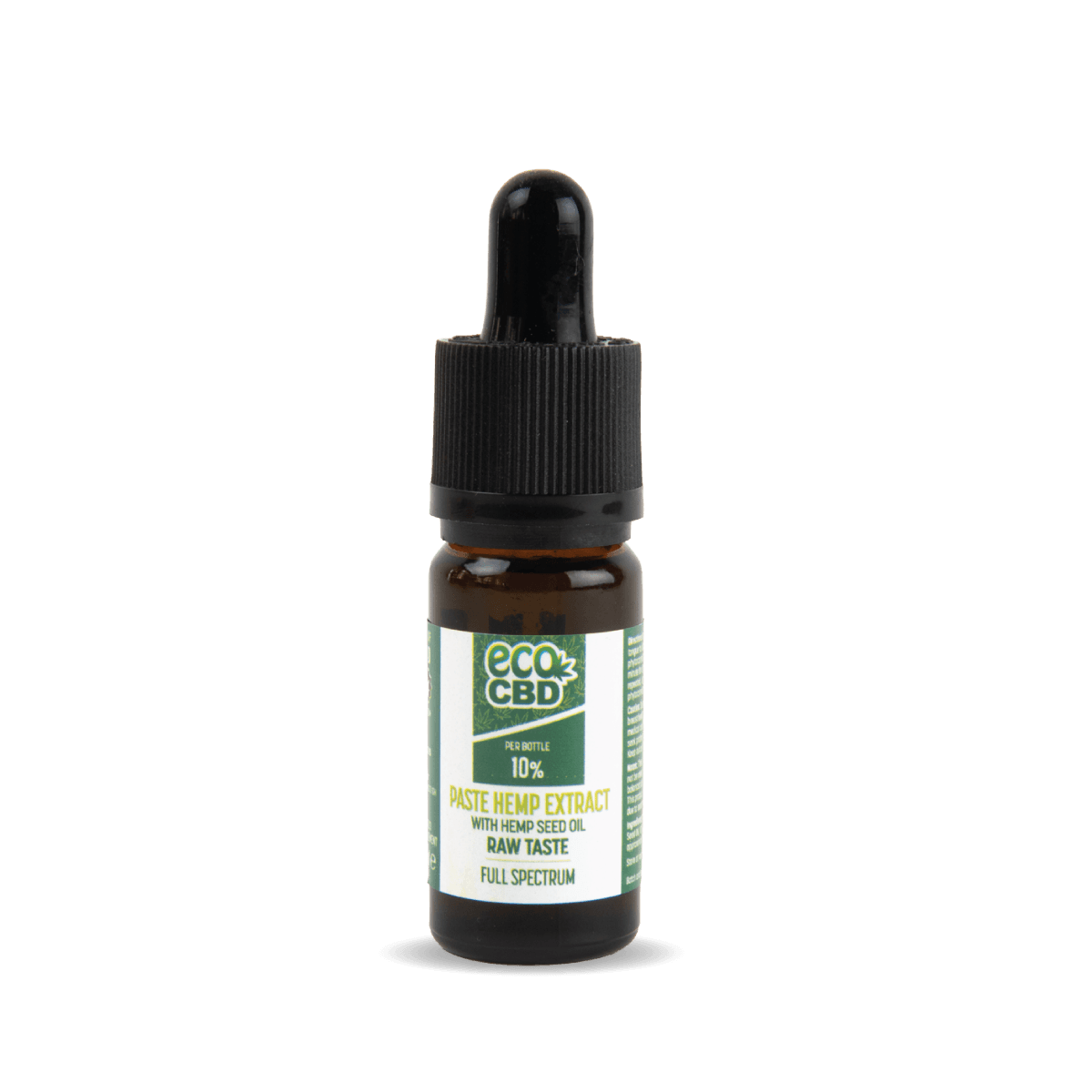
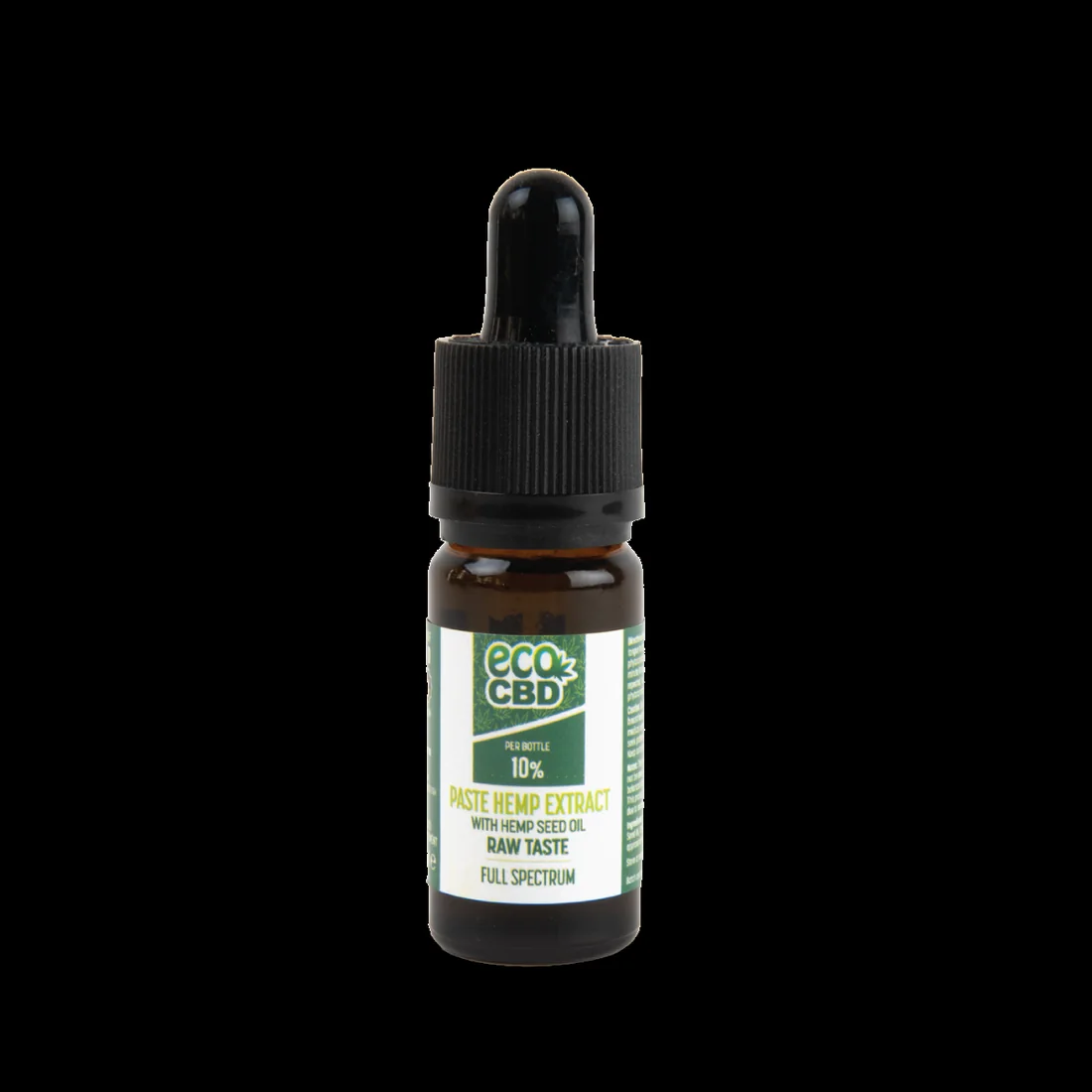
Eco-CBD Paste Hemp Extract 10%, Full Spectrum
£5.99
In stock — dispatched today if ordered by 3pm
A full spectrum hemp paste extract stated at 10 per cent, blended with hemp seed oil and supplied in a bottle with a pipette. The label says raw taste and means it. 18+ only.
- Free UK delivery on orders over £30
- Third-party lab-tested — COA on every batch
- Discreet plain packaging, no branding outside
- Sold to over-18s only, age-checked at checkout
Eco-CBD Hemp Oil Paste Extract is a full spectrum hemp paste blended with hemp seed oil, stated on the bottle at 10 per cent. If you have read anything about CBD pastes you will have been told they come in syringes because they are too thick for a dropper. This one does not, and the reason why is the most useful thing to understand about it before you buy.
A paste that pours like an oil
Almost every explanation of CBD paste draws the same contrast: oils come in a glass bottle with a pipette, pastes come in a syringe, because a paste is a thick material that will not flow through a dropper.
This product arrives in a standard amber bottle with a pipette. The label reads paste hemp extract, with hemp seed oil, and that second phrase is the explanation. The paste has been let down with a carrier until it is thin enough to pour and to draw up through a pipette.
So the word paste here describes what went into the bottle rather than the consistency of what comes out. That is not a sleight of hand and it is a common way to sell this kind of extract, but it does mean that anyone expecting the syringe format described everywhere else will be surprised.
The practical consequence is that it handles like an oil. You use a pipette rather than pushing a plunger, and you can measure it in drops the way you would any other oil in this format.
What makes an extract a paste rather than an oil
The difference is filtration, and it is worth understanding because it explains everything else about this product.
Producing a clear CBD oil involves removing things: waxes, lipids and chlorophyll are filtered out of the extract, which is what makes the result pale, thin and relatively mild in flavour. That step is called winterisation and it is standard for most oils on the market.
A paste extract keeps them. The waxes, the plant lipids, the chlorophyll, the terpenes and the flavonoids all stay in, which is why a paste is dark, thick and tastes considerably more of plant than a filtered oil does.
That is the whole trade-off, stated plainly. You keep more of what was in the plant and you get more of what the plant tastes like. Neither is objectively better, and which one suits you depends entirely on whether the flavour is a trade you are willing to make.
| Paste extract | Filtered oil | |
|---|---|---|
| Waxes and lipids | Retained | Removed |
| Chlorophyll | Retained | Largely removed |
| Colour | Dark | Pale to golden |
| Texture | Thick unless a carrier is added | Thin |
| Flavour | Strongly of plant | Milder |
Raw taste is printed on the bottle, and that is to the brand's credit
The front label carries the words raw taste. We want to draw attention to that, because it is unusual.
We spend a lot of these product pages correcting labels that promise more than the contents deliver, so it is worth stopping when a brand does the opposite. Eco-CBD has printed a flavour warning on the front of the bottle, in the same size type as the rest of the description, where most makers would have reached for something like natural or earthy.
It is also accurate. An unfiltered whole-plant extract is bitter, green and strongly vegetal, and there is no polite way around that. If you have only used flavoured oils this will be a considerable step up in intensity, and taking it neat rather than in food or a drink is not something everyone gets on with.
One point of genuine uncertainty. The word raw is often used in this category to indicate that an extract has not been decarboxylated, meaning it still carries CBDa, the acid form that heat converts into CBD. This label does not say either way, we could not confirm it, and we are not going to guess. If that distinction matters to you it is worth asking before ordering.
Full spectrum, and why that matters more on a paste
The bottle states full spectrum, which means the extract deliberately retains the range of compounds the plant produced rather than isolating one of them.
On a paste that carries further than usual, because a paste is the least filtered format we sell. Where an oil has had material actively taken out of it, a paste is defined by the fact that it has not.
Which brings us to the thing we say on every full spectrum product and mean most on this one. In the UK what governs a finished product is the total quantity of controlled cannabinoids in the container, counted together rather than one compound at a time. Full spectrum is the grade that deliberately keeps the plant's minor cannabinoids, so it is the grade where that question is live.
We do not hold a certificate of analysis for a batch of this product. That means we state no figure for it, we imply none, and we run no arithmetic on the label. We are not suggesting anything is wrong with it: we are telling you the limit of what we can actually stand behind. If the number matters to your decision, ask us or the maker for the certificate covering the batch before you order, and read it rather than the front of the bottle.
| Product | Format | Filtered |
|---|---|---|
| Eco-CBD Paste Hemp Extract (this page) | Paste in a pipette bottle | No, by design |
| [EndoFlo Full Spectrum Tincture](/products/endoflo-full-spectrum-cannabis-oil-tincture-peppermint) | Flavoured tincture | Yes |
| [Euphoria Full Spectrum CBD Oil 10,000mg](/products/euphoria-full-spectrum-cbd-oil-10-000mg-30ml) | Oil in a pipette bottle | Yes |
| [Professor Herb CBD Oil 3000mg](/products/professor-herb-cbd-mct-tincture-oil-3000mg-30ml) | Oil in MCT carrier | Yes |
A correction to our own listing
Our product record describes this as a CBD oil made with CBD isolate. It is not, and unusually the record disagrees with itself: the same entry also records the product as full spectrum, which is what the bottle says.
Isolate and full spectrum are opposites. One is a single purified compound with everything else stripped out; the other deliberately keeps the range. A paste is about as far from an isolate as a hemp extract gets.
That description is generated automatically from our supplier feed rather than written by anyone, and it has been logged for correction along with a growing list of others. The label on the bottle is the thing to trust.
Sold to over-18s. This is not a medicine and nothing on this page describes an effect or recommends an amount.
Who should choose something else
If flavour matters to you, this is the strongest-tasting oil format we sell and the label says so itself. A flavoured tincture will suit you far better.
If you were expecting a syringe, this is a pipette bottle, and a genuine thick paste is a different product from a different maker.
If you want a stated milligram figure rather than a percentage, the bottle gives only a percentage and our own record carries no milligram figure at all.
If the exact cannabinoid content of the batch matters to you, ask for the certificate first. On a full spectrum paste that is the one document worth reading, and we do not currently hold it.
If you want CBD isolate, this is the opposite of that, whatever our listing currently says.
Frequently asked questions
- Why is this paste in a pipette bottle rather than a syringe?
- Because it has been blended with hemp seed oil, which the label states on the front. A neat paste extract is too thick to draw through a pipette, so a carrier is added until it flows. The word paste describes the extract that went into the bottle rather than the consistency of what comes out of it.
- What is the difference between a CBD paste and a CBD oil?
- Filtration. Making a clear oil involves removing waxes, lipids and chlorophyll from the extract, which is what makes it pale and relatively mild. A paste keeps them, along with the terpenes and flavonoids, so it is darker, thicker and tastes far more strongly of plant. Neither is better; it is a trade between keeping more of the plant and tasting more of it.
- What does raw taste mean on the Eco-CBD label?
- Exactly what it says, and we think printing it is to the brand's credit. An unfiltered whole-plant extract is bitter, green and strongly vegetal, and most makers would have chosen a gentler word. If you have only used flavoured oils, this is a substantial step up in intensity.
- Does raw mean this extract has not been decarboxylated?
- We cannot tell you. The word raw is often used in this category to indicate an extract still carrying CBDa, the acid form that heat converts into CBD, but this label does not state either way and we could not confirm it from anything published. If that distinction matters to your choice it is worth asking the maker before ordering.
- Why do you not publish a THC figure for this full spectrum paste?
- Because we do not hold a certificate of analysis for a batch of it, and we will not state a figure we cannot stand behind. In the UK the test applied to a finished product is the total quantity of controlled cannabinoids in the container, counted together. Full spectrum deliberately retains the plant's minor cannabinoids, which makes that the live question and makes the batch certificate the document worth reading.
- Is a paste stronger than an oil?
- Not automatically, and the format does not tell you. What a paste gives you is a less filtered extract carrying more of the plant's other compounds, which is a different thing from concentration. This bottle states 10 per cent, and comparing that with the stated figure on any other product is the only meaningful comparison rather than assuming a format implies a strength.
- Why does your listing call this a CBD isolate product?
- It should not, and the record even contradicts itself, since the same entry also records the product as full spectrum. Isolate and full spectrum are opposites: one strips everything but a single compound, the other keeps the range. The description is generated automatically from our supplier feed and has been logged for correction. The bottle is what to trust.
- Can you take a hemp paste extract in food or a drink?
- It is a common way to handle a strongly flavoured extract, and since this one has already been blended into hemp seed oil it mixes more readily than a neat paste would. We are describing how the format behaves rather than recommending an amount or a method, and we give no guidance on quantity on any product we sell.
Updated July 2026
Reviews
No reviews for Eco-CBD Paste Hemp Extract 10%, Full Spectrum yet. We only publish feedback from people who have actually bought the product, so this stays empty until a real one arrives rather than being filled with anything we made up.
Bought this? Write a review
Write it here and we will check it against your order before it goes up. We publish the critical ones too, so long as they are from a real buyer.
Prefer not to use the form? Send it over instead:
More cbd oil
Drops, oral sprays and pastes