Multitrance
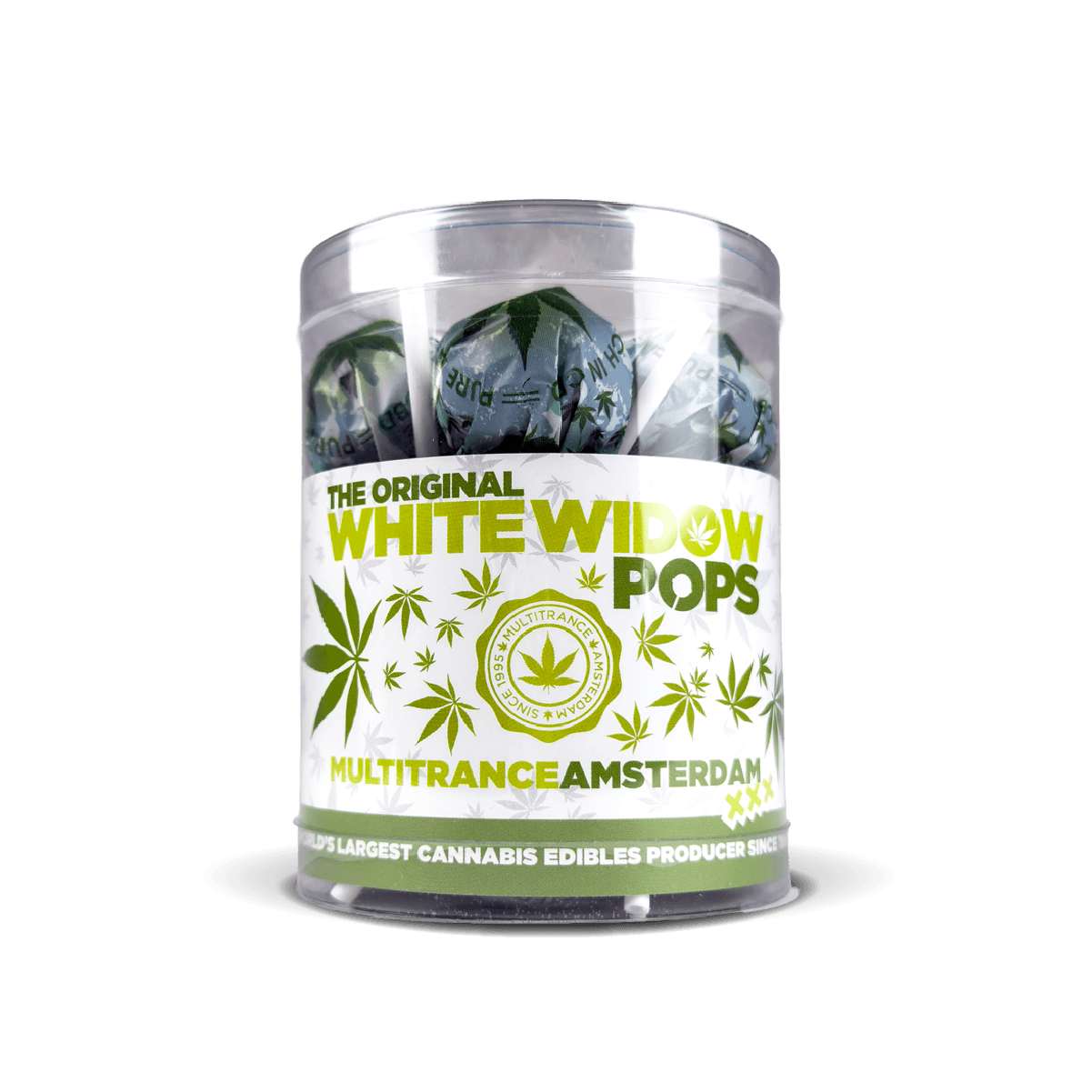
Multitrance White Widow Cannabis Pops
£5.99
In stock — dispatched today if ordered by 3pm
Handmade cannabis flavoured lollipops named after one of the most famous strains bred in Amsterdam. THC free, made in the EU, no cannabinoid content. 18+ only.
- Free UK delivery on orders over £30
- Third-party lab-tested — COA on every batch
- Discreet plain packaging, no branding outside
- Sold to over-18s only, age-checked at checkout
Multitrance White Widow Pops are handmade cannabis flavoured lollipops named after one of the most famous cannabis strains ever bred, and unlike most strain names borrowed by confectionery, this one has a documented history, a named breeder, a Cannabis Cup win and an argument about who deserves the credit that has never been settled. The lolly contains no cannabinoid. The name it borrowed is a genuine piece of Amsterdam history, and no page selling these has ever explained it.
Who actually bred White Widow
White Widow was bred in the Netherlands in the 1990s, and the person usually credited is Shantibaba, born Scott Blakey, an Australian breeder who was then working at the Green House Seed Company.
The genetics are specific and unusually well documented for a strain of that era: a Brazilian sativa mother crossed with a South Indian indica father, the latter originating in the mountains of Kerala. That pairing of a South American sativa with a South Asian indica is what gave the strain its balance and, more importantly for the name, its resin production.
Green House released it in 1994. By 1995, a year after it reached coffeeshop shelves, it had won the High Times Cannabis Cup. Accounts of that period describe the win as resetting what the Amsterdam scene expected in terms of resin coverage, which is a strong claim but a widely repeated one.
It became one of the handful of strain names that escaped the cannabis world entirely. Most people who have heard of White Widow have never bought cannabis, which is exactly why an Amsterdam confectioner would put it on a lollipop.
And the argument about it is still going
The word Original in this product's name is doing more work than whoever wrote it probably realised, because the origin of White Widow is genuinely contested.
Credit is disputed between Shantibaba and a Dutch breeder known as Ingemar. Both accounts have been published for years and neither has been settled to everyone's satisfaction.
Shantibaba, who later co-founded Mr Nice Seeds, maintains that the seeds which won the 1995 Cannabis Cup came exclusively from his own plants. The counter-account credits Ingemar with the underlying work. We are not in a position to adjudicate a thirty-year-old breeding dispute and we are not going to pretend otherwise.
What we can say is that a product calling itself The Original White Widow is naming something whose originality is precisely what people have argued about. That is a small joke the packaging almost certainly did not intend, and it is more interesting than anything else on the label.
The name is about trichomes
White Widow is named for its appearance. The flowers of the strain are so heavily coated in resin that they look dusted with white, and that coating is trichomes.
Trichomes are outgrowths of the plant surface. On cannabis they are glandular, meaning they secrete, and what they secrete is the resin carrying the cannabinoids and terpenes the plant is grown for. A strain that produces a conspicuous amount of them looks frosted, and White Widow was named for looking exactly that.
There is a neat coincidence on our own shelves, which we noticed while writing about a different lollipop entirely. The Peach Fuzz lollipops in our range are named after peach fuzz, and a peach's fuzz is also made of trichomes, though the non-glandular kind that secrete nothing and exist purely as a physical defence.
So we now sell two sweets named after two different kinds of trichome, one from a fruit and one from a cannabis strain, and neither product mentions it. That page is linked below if the biology interests you.
What a strain name can mean on a sweet with no cannabis
Being straightforward about this: there is no cannabinoid in this lollipop. It is a boiled sweet, handmade, listed by the manufacturer with sugar, corn syrup, citric acid, a cannabis extract and food colourings, described as THC free and made in the EU.
So what is a White Widow flavour actually referencing? Not the effects, which the sweet does not produce. Not the cannabinoid content, which is nil. What is left is the aroma, and that is a real thing rather than a marketing abstraction: a strain's smell comes from its terpene profile, and terpenes are aromatic compounds that can be reproduced.
Whether this particular sweet is built on a genuine White Widow terpene expression or simply on a general herbal cannabis note is not stated by anyone, and we are not going to assume. Our sibling page on the wider Multitrance lollipop range goes into the strain-naming convention across the whole line and is linked below.
What we would say is that a strain name on a sweet is a promise about smell rather than about anything else, and it is worth reading it that way before you buy.
The twelve that is a weight, not a count
There is a counting problem across this product and it has a specific cause worth isolating.
Our own listing name says ten. Our catalogue records the unit differently again. The image filename attached to it says twelve. The manufacturer sells White Widow pops as single lollies, in gift boxes of ten and in display containers of one hundred. And at least one European retailer lists the product as twelve grams.
That last one is the key. Twelve grams is a weight, and another source gives eighteen grams for a single lolly. Somewhere in the chain a gram figure has been read as a piece count, which is how a product sold in tens and hundreds acquires a phantom twelve.
Our sibling page covers the broader problem that no two labels in this range agree on quantities, so we will not re-run it here. The specific thing to take away is that if you see a twelve attached to White Widow pops, check whether it is grams before you assume it is lollies.
If the exact count in the unit we ship decides your purchase, ask us and we will confirm from the case rather than from a listing.
| Source | Figure | What it probably means |
|---|---|---|
| Our listing name | 10 pack | A count |
| Our catalogue record | 1 unit | Unresolved |
| Our image filename | 12pcs | Probably a misread weight |
| Manufacturer, gift box | 10 lollies | A count |
| Manufacturer, display | 100 lollies | A count |
| A European retailer | 12g | A weight |
| Another source | 18g | A weight, for one lolly |
Where it sits among the lollipops we carry
Our lollipop shelf is deeper than most and splits into two quite different propositions, which is the useful way to compare rather than by flavour.
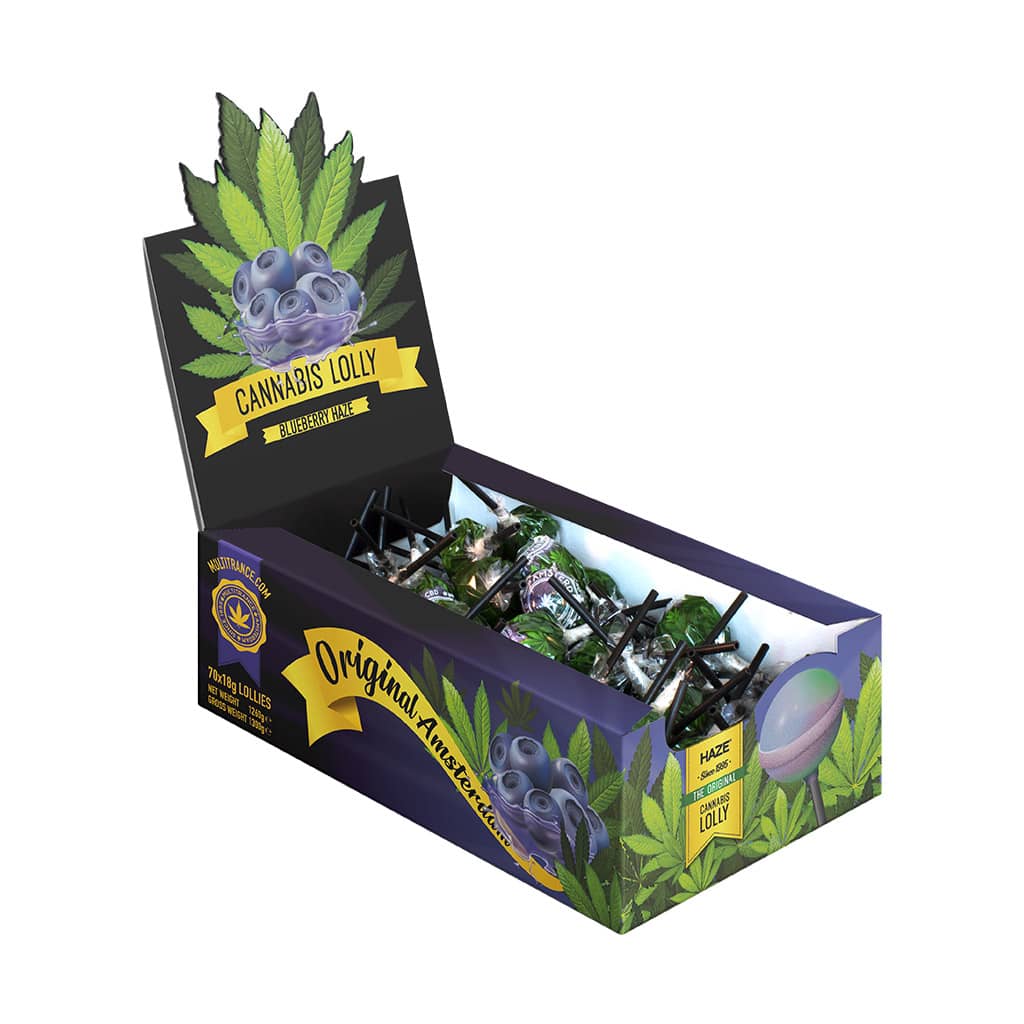
One group is strain-named and herbal: this White Widow pop, the Multitrance cannabis lollipops in Hash and OG Kush, and the HaZe range. These are trading on the cannabis association and taste herbal to some degree.
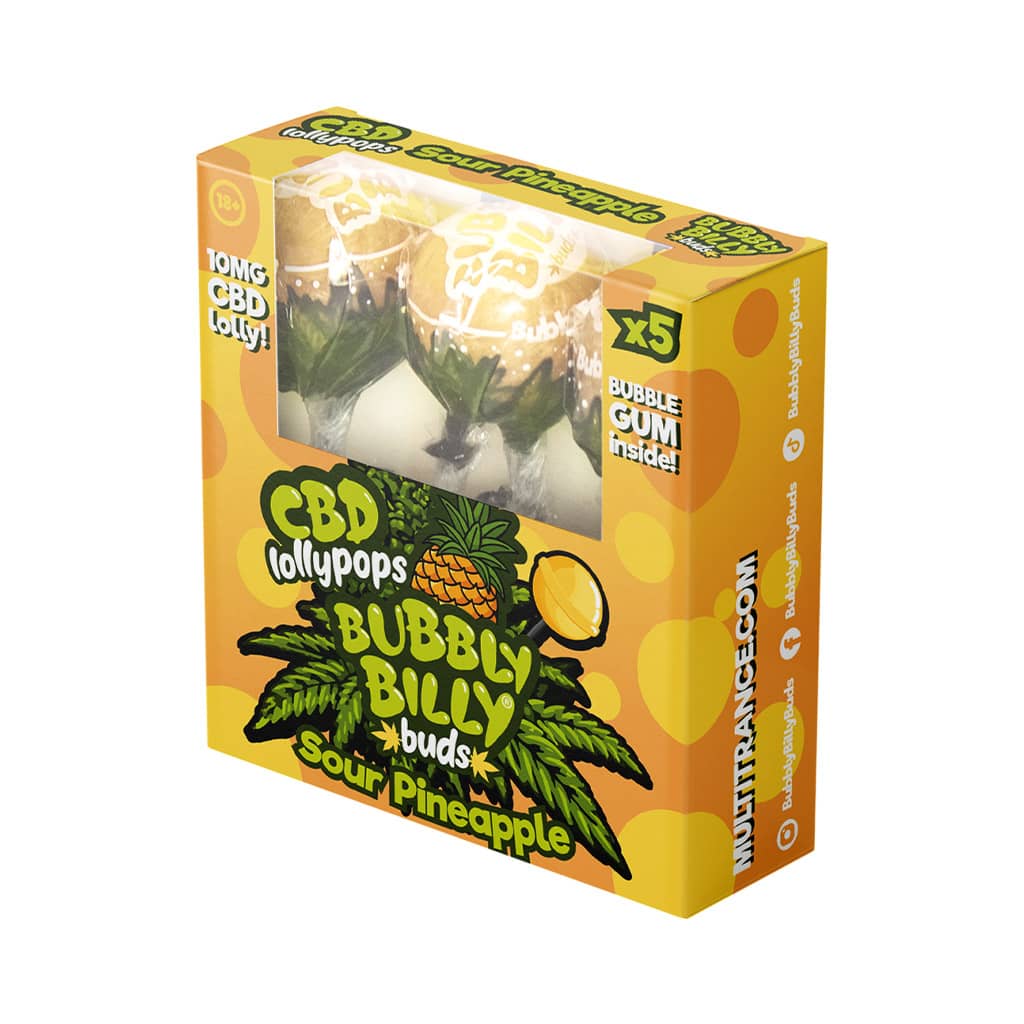
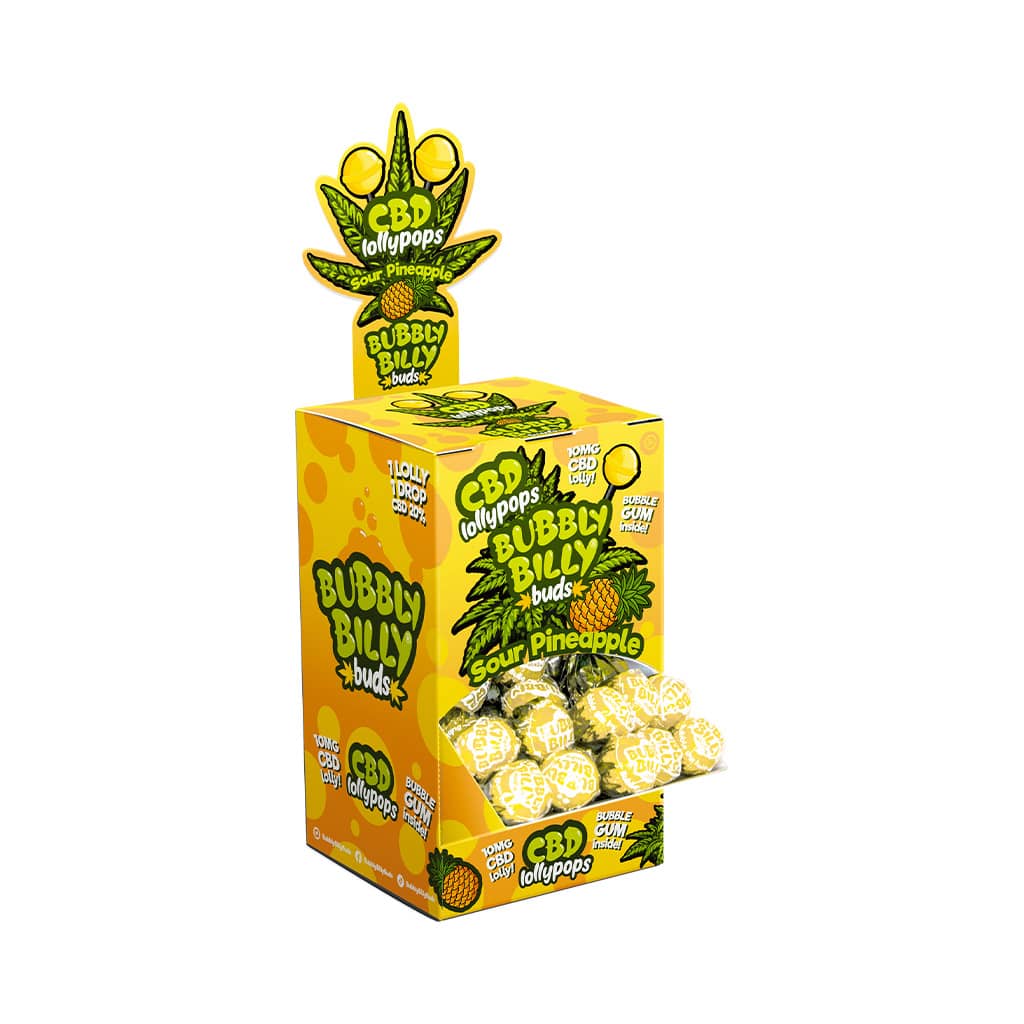
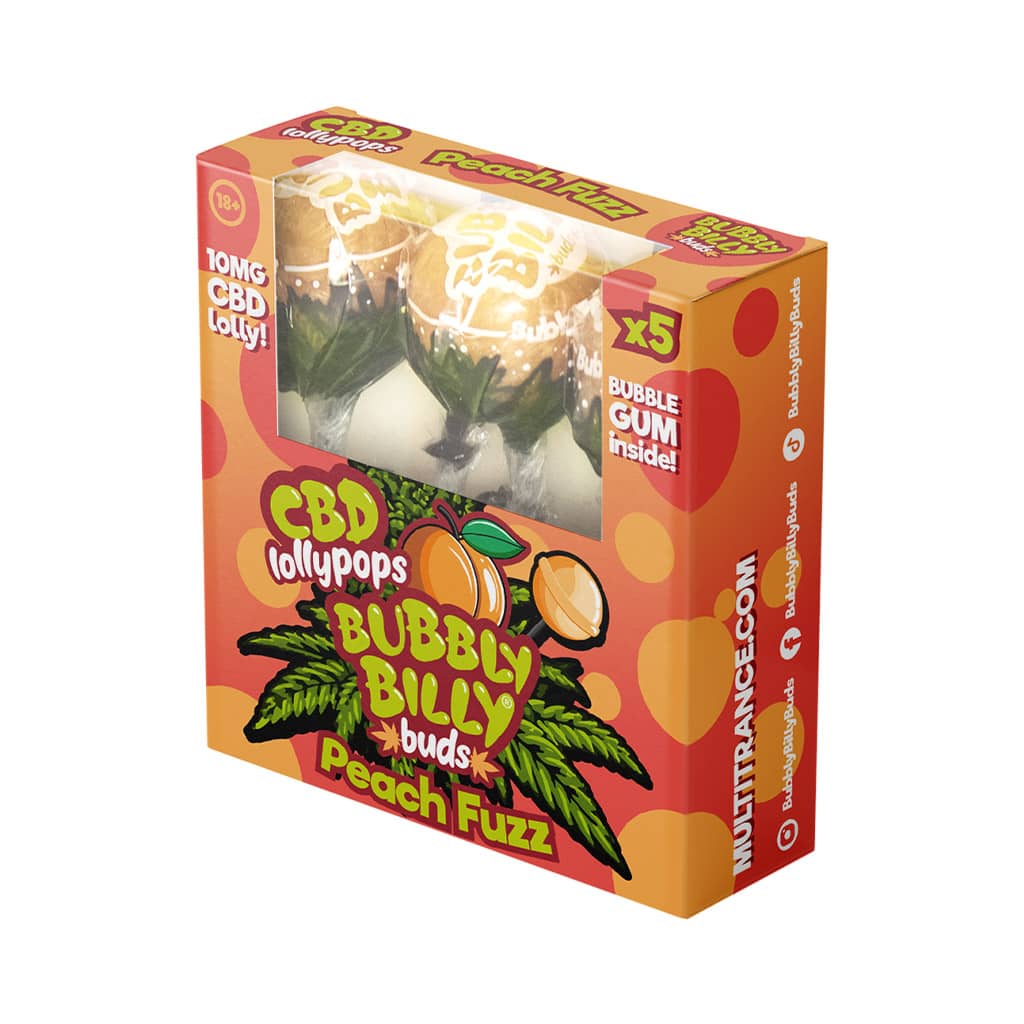
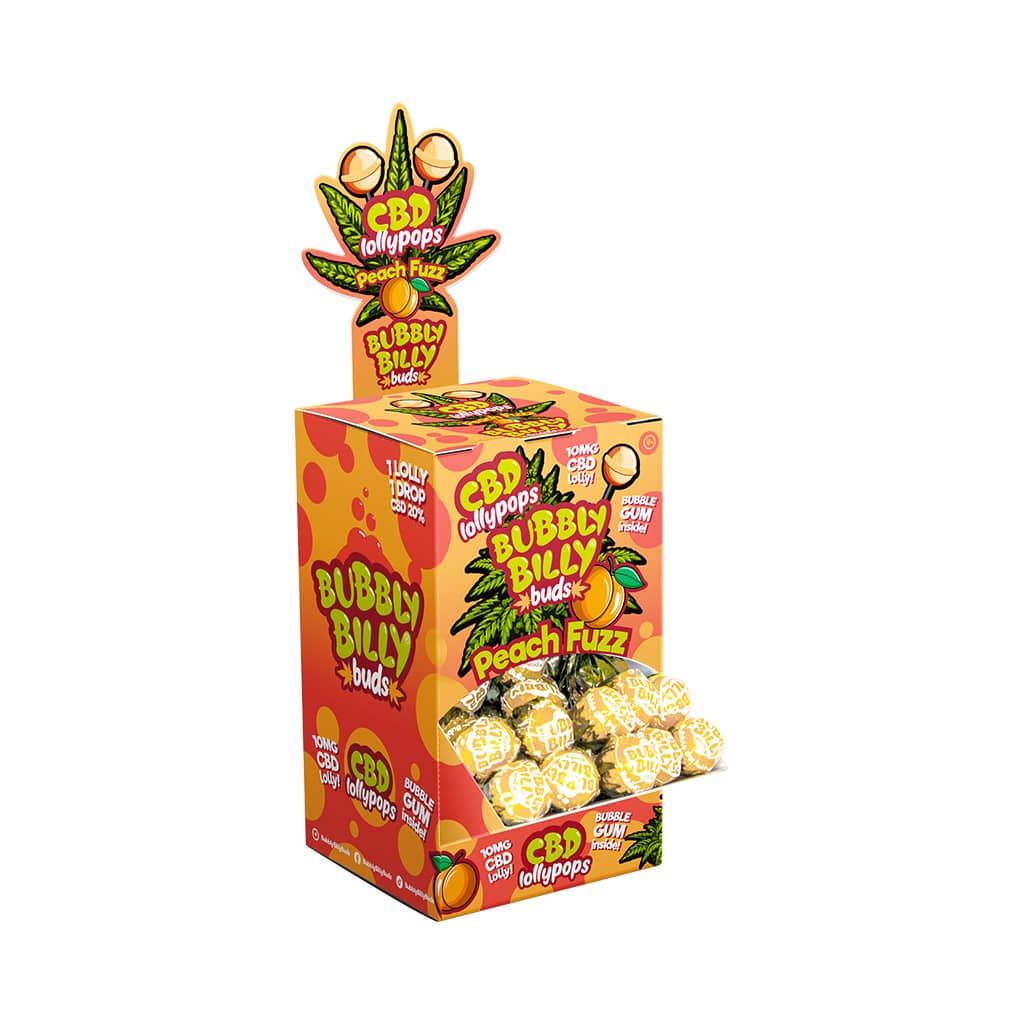
The other group is straightforwardly confectionery: the Bubbly Billy Buds range in blue raspberry, peach, cola and pineapple, which are fruit sweets with a bubble gum centre and a stated CBD content on their multi-variant listings.
If you want the cannabis reference, this shelf. If you want a cannabinoid figure you can point at, the other one.
| Product | Named after | Cannabinoid stated |
|---|---|---|
| White Widow Pops, this page | A cannabis strain | None |
| Multitrance Cannabis Lollipops | Strains, including Hash and OG Kush | None |
| Multitrance HaZe Lollipops | Strains and fruit | None |
| Euphoria Cannabis Lollipops | Cannabis, with a bubblegum centre | None |
| Bubbly Billy Buds, four flavour box | Fruit and cola | Yes, on that listing |
Who should buy something else
If you want CBD, this is not a CBD product. There is no cannabinoid figure on it from anyone, and a boiled sweet named after a strain is selling you an association rather than a compound.
If you expect it to taste like White Widow smells, calibrate. Nobody publishes whether the flavouring is a genuine terpene expression of that strain or a general herbal cannabis note, and a hard-boiled sugar sweet is a blunt instrument for reproducing a complex aroma either way.
If the exact quantity matters, ask before ordering. The figures attached to this product across the market include at least one weight being read as a count, and we would rather confirm than guess.
And if you dislike herbal flavours, this is the wrong half of our lollipop shelf entirely. The Bubbly Billy Buds range is fruit and cola with a gum centre, and it is linked above.
Frequently asked questions
- Who bred the White Widow cannabis strain?
- It is usually credited to Shantibaba, born Scott Blakey, an Australian breeder working at Green House Seed Company in the Netherlands in the 1990s. The genetics are given as a Brazilian sativa mother crossed with a South Indian indica father from the mountains of Kerala.
- Why is the origin of White Widow disputed?
- Credit is contested between Shantibaba and a Dutch breeder known as Ingemar, and both accounts have been published for years without being settled. Shantibaba maintains the seeds that won the 1995 Cannabis Cup came exclusively from his own plants. We are not in a position to adjudicate it.
- When did White Widow win the Cannabis Cup?
- In 1995, a year after Green House released it in 1994. Accounts of the period describe the win as resetting what the Amsterdam scene expected in terms of resin coverage, which is a large claim but a widely repeated one across cannabis publications and seed banks.
- Why is the strain called White Widow?
- Because of how it looks. The flowers carry such heavy resin coverage that they appear dusted with white, and that coating is made of trichomes, the glandular outgrowths that secrete the resin carrying cannabinoids and terpenes. The name describes an appearance rather than an effect.
- Do White Widow pops contain any cannabis?
- No cannabinoid figure is published by anyone. The manufacturer lists sugar, corn syrup, citric acid, a cannabis extract and food colourings, and describes the range as THC free. A strain name on a boiled sweet is a reference to aroma rather than to anything you would measure in milligrams.
- What can a White Widow flavour actually be based on?
- Terpenes, the aromatic compounds that give a strain its smell, since those are the only part of a strain that can be reproduced in confectionery. Whether this sweet uses a genuine White Widow terpene expression or a general herbal note is not stated by the manufacturer or any retailer.
- Why do some listings say twelve when others say ten?
- Because at least one of the twelves is grams rather than pieces. A European retailer lists the product as 12g and another source gives 18g for a single lolly, while the manufacturer sells them in tens and hundreds. A weight has been read as a count somewhere in the chain.
- Are any of your lollipops named after something other than cannabis?
- Yes, and they are the ones with a stated cannabinoid content. The Bubbly Billy Buds range is named after fruit and cola rather than strains, has a bubble gum centre, and its multi-variant listings state a milligram figure. The strain-named sweets on our shelf do not.
Updated July 2026
Reviews
No reviews for Multitrance White Widow Cannabis Pops yet. We only publish feedback from people who have actually bought the product, so this stays empty until a real one arrives rather than being filled with anything we made up.
Bought this? Write a review
Write it here and we will check it against your order before it goes up. We publish the critical ones too, so long as they are from a real buyer.
Prefer not to use the form? Send it over instead:
More cbd sweets
Lollipops, gum, mints and hard sweets